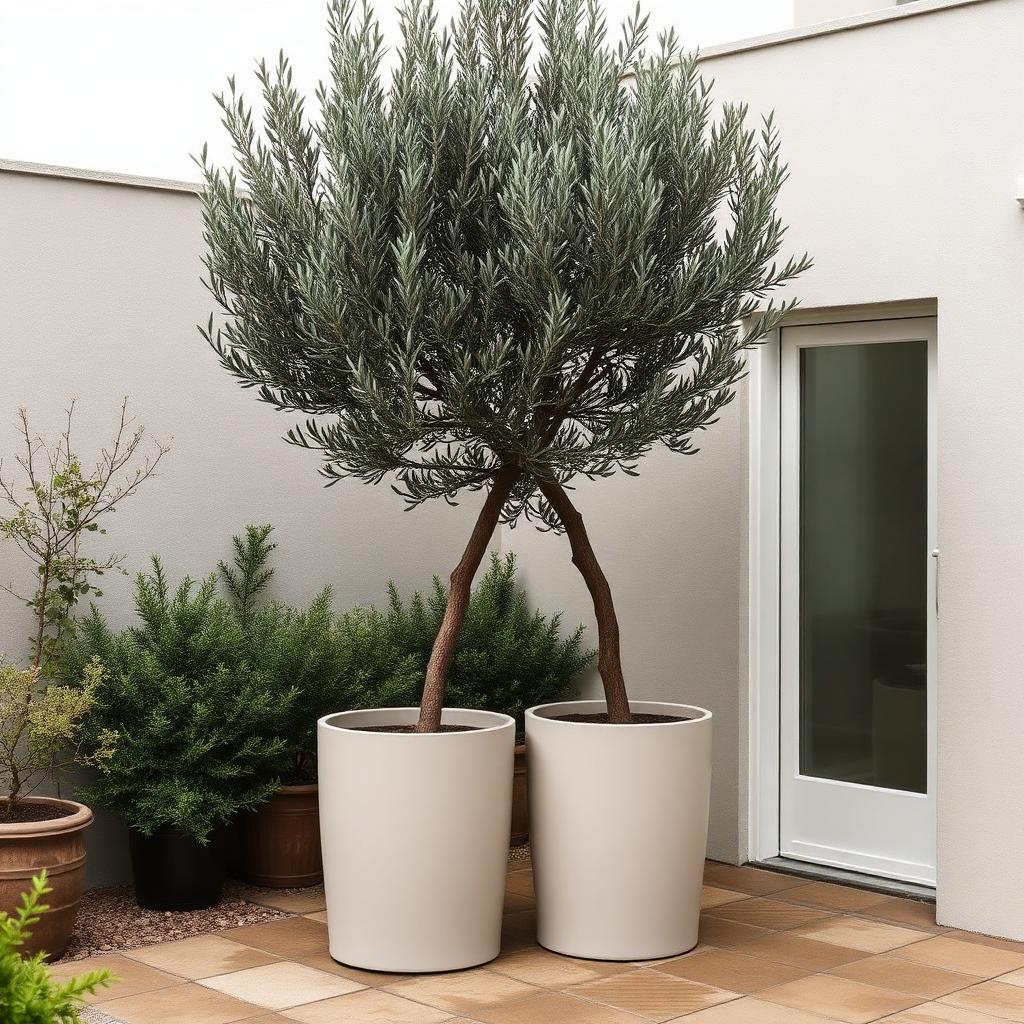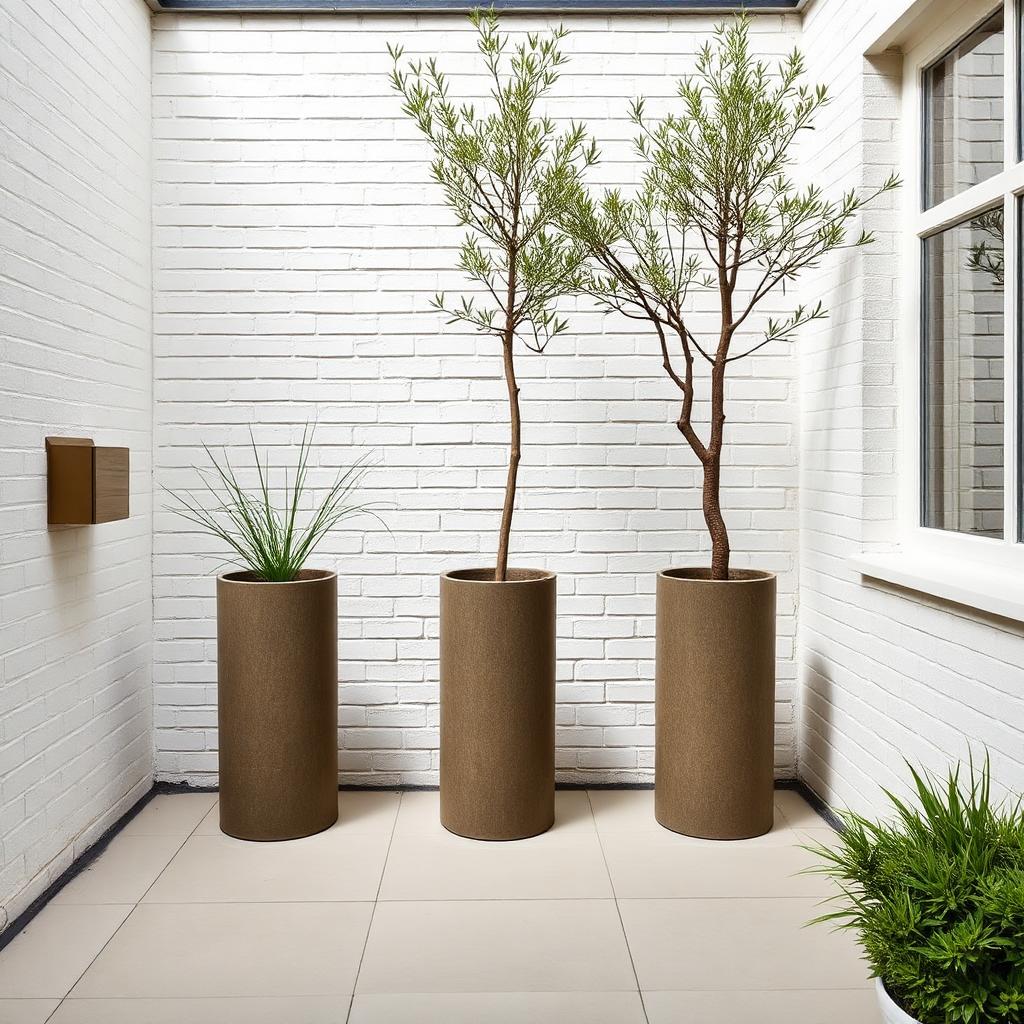
The pots themselves are almost always fine. Modern fibreglass and glazed ceramic planters are engineered for UK winters and won't crack or spall the way old terracotta does. The real winter problem is the root ball, which in a container sits above ground level and freezes far faster than roots in open soil.
Why potted roots suffer
Ground roots are insulated by tonnes of surrounding soil that holds heat and buffers overnight temperature drops. A potted root ball has 40–80 litres of compost and is exposed to freezing air on five sides. In a hard frost, a potted olive's root ball can drop to -6°C overnight while an olive planted 30cm from it in the ground stays at 0°C.
The four-part winter routine
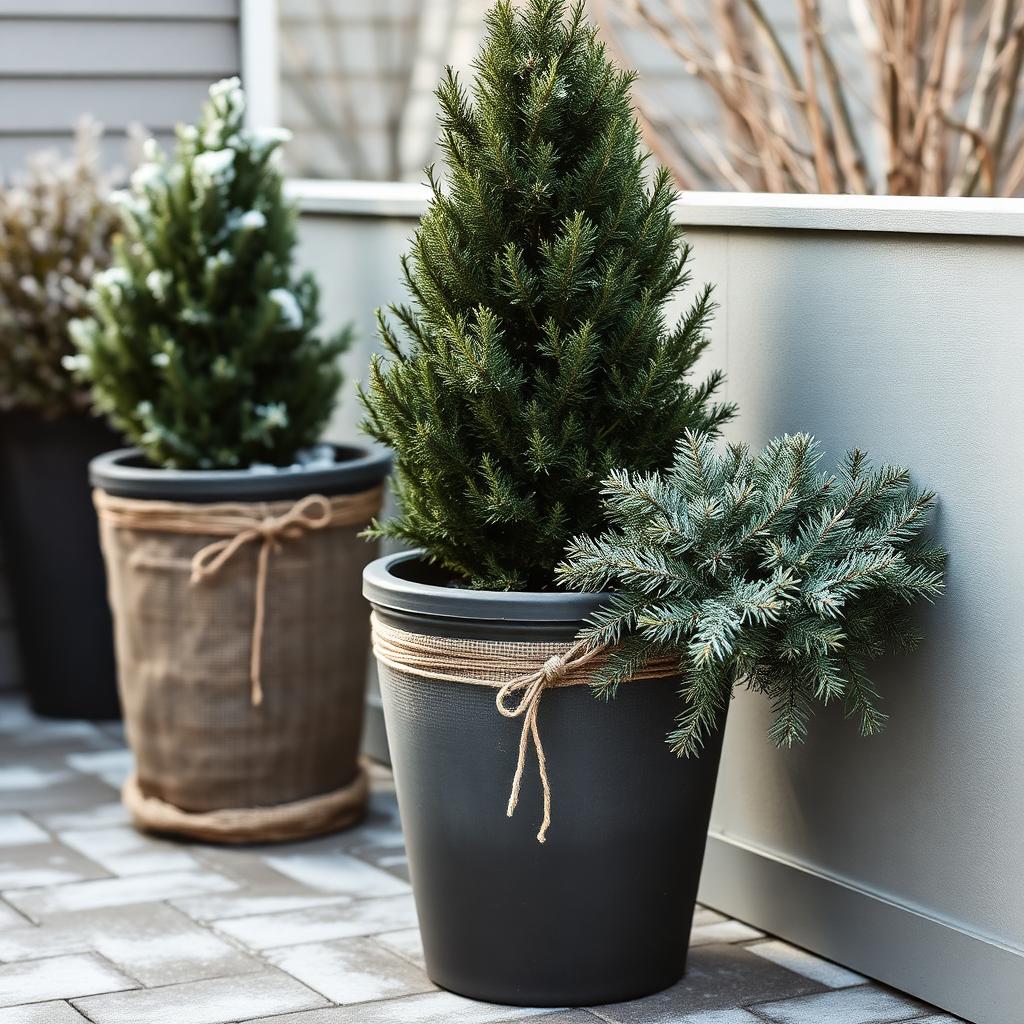
1. Wrap the pot, not the plant
Insulate the sides of the planter with:
- Hessian sacking, doubled over and tied with twine (looks the smartest)
- Horticultural fleece, 2–3 layers, wrapped and pinned
- Bubble wrap under hessian if temperatures forecast are below -5°C for extended periods
The mass of the pot then regulates root temperature much more effectively. Leave the top open so rain can still drain through.
2. Raise it off the ground
Pot feet or hardwood battens stop the base from freezing solid to the paving. A frozen base traps ice, blocks drainage, and means the root ball sits in meltwater when the thaw comes.
- 15–20mm clearance is enough
- On timber decking, use rubber pads to prevent staining
- On gravel, feet aren't essential but still help drainage
3. Group them
Cluster smaller pots together against a south-facing wall or in a sheltered corner. They buffer each other — the outside pots take the brunt, the inside ones stay warmer. A group of five 40cm pots huddled together survives a hard frost far better than the same five spread around a garden.
4. Mulch the top
A 3–5cm mulch of composted bark or leaf mould on top of the root ball:
- Reduces evaporation
- Insulates the top of the root zone
- Prevents the surface from freezing solid and shedding rain off before it can drain
Species-by-species guide
| Plant | Winter action |
|---|---|
| Olive | Wrap pot if below -5°C forecast; move to shelter if young |
| Bay standard | Fleece the crown in hard frost; wrap pot |
| Phormium | Tie leaves into upright bundle to shed rain; wrap pot |
| Lavender | Wrap pot; ensure sharp drainage; don't overwater |
| Boxwood | Wrap pot; consider a fleece cap if wind exposed |
| Acer | Move to sheltered spot; wrap pot; avoid winter sun on frozen bark |
| Hardy fern | Wrap pot; leave old fronds on until March to protect crown |
| Citrus | Bring under cover — greenhouse, porch, cold frame — below 5°C |
Watering in winter
Counter-intuitive but critical: potted plants can dehydrate in winter. Frozen soil can't be drawn up by roots even if the air is damp. On a dry cold snap, water lightly on the warmest part of the day once a fortnight. Dehydration is often mistaken for frost damage.
Wind is the hidden problem
Cold, dry easterly wind desiccates evergreen foliage faster than frost itself. Signs: browning tips on box or bay, especially on the windward side.
- Move pots out of wind funnels between buildings
- Erect temporary hessian windbreaks for exposed sites
- Late-planted evergreens (planted the same autumn) are most vulnerable
The spring reveal
Unwrap in mid to late March, not before. Late frosts through April can still catch you out. Water thoroughly to flush any accumulated salts and top up compost that has slumped over winter.
Well-executed, the whole routine takes an afternoon in November and pays back in ten years of container plantings you don't have to replace.