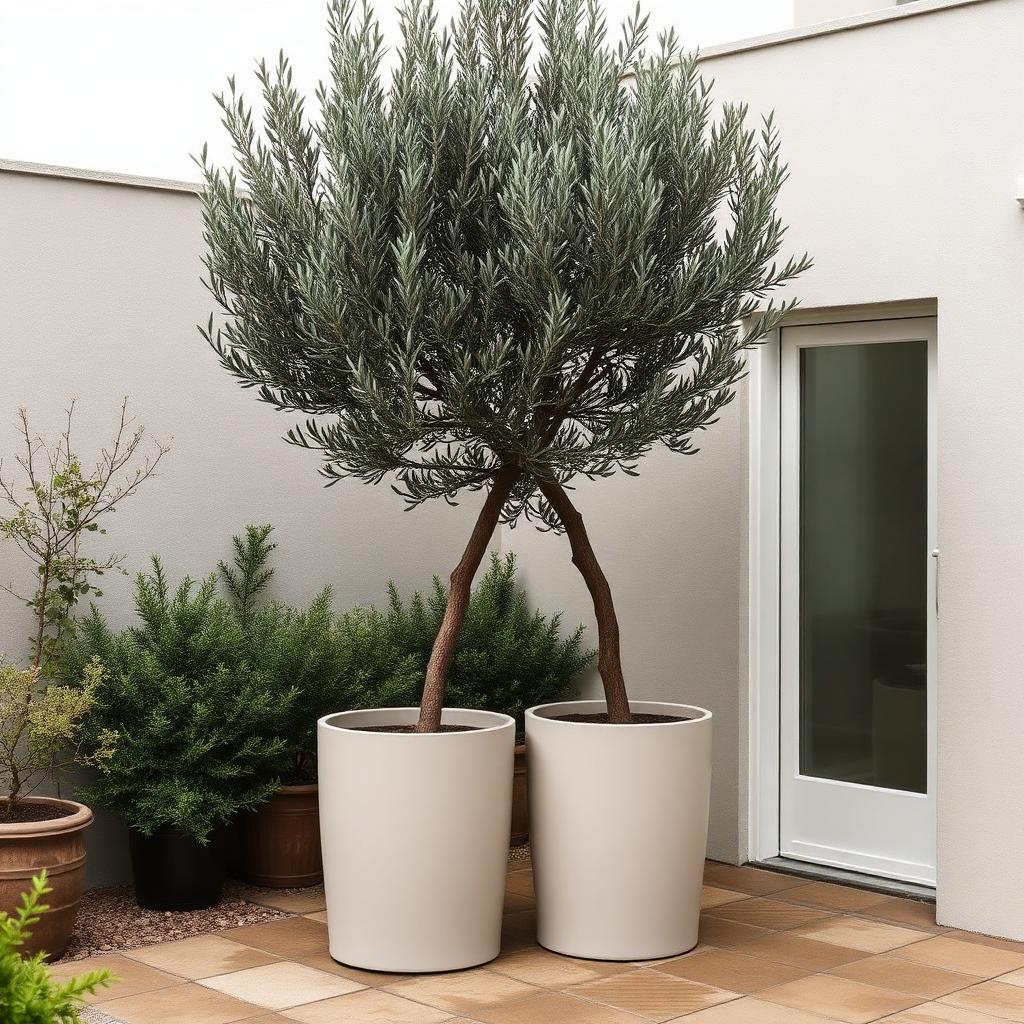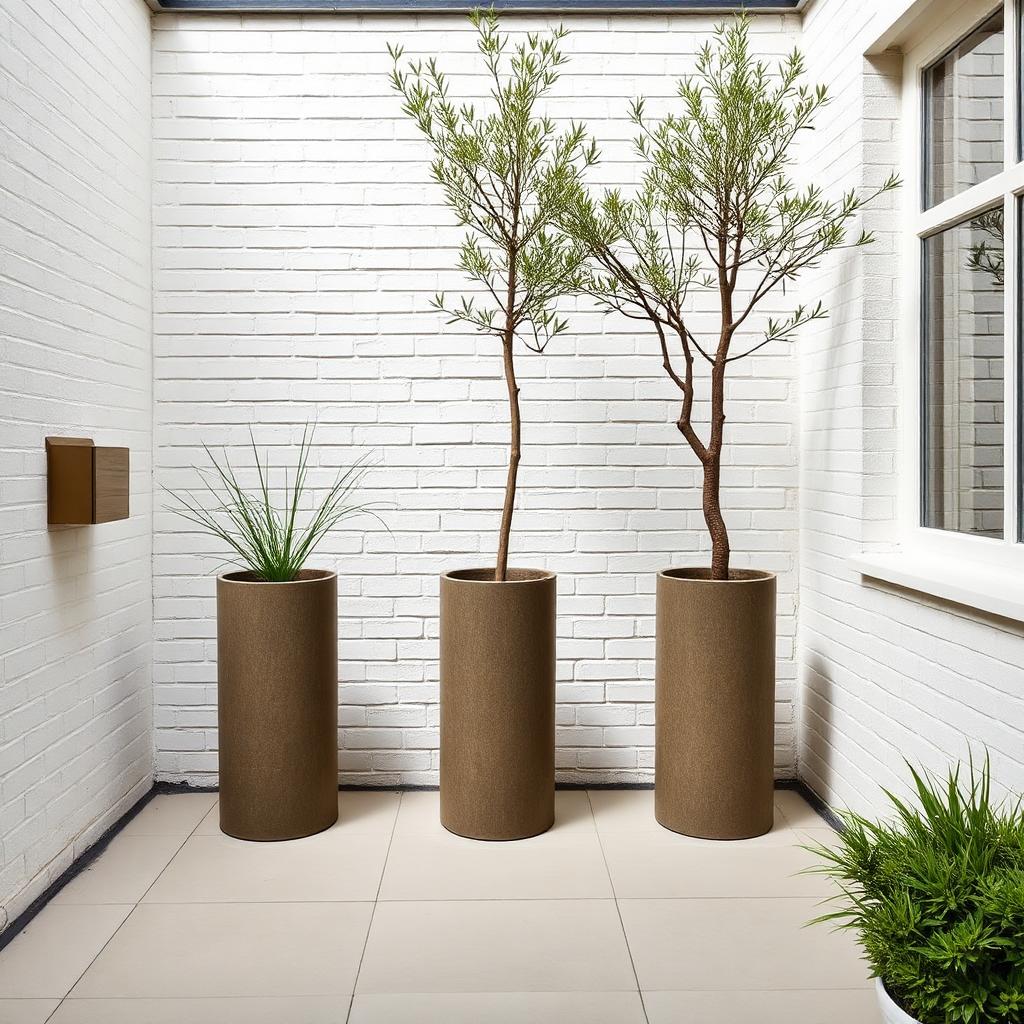
Fibreglass planters are UV-stable, frost-safe, and don't leach mineral salts the way terracotta and concrete do. They live outside year-round across the UK with almost no intervention — but a bit of routine keeps the finish looking factory-new for a decade or more.
The annual clean
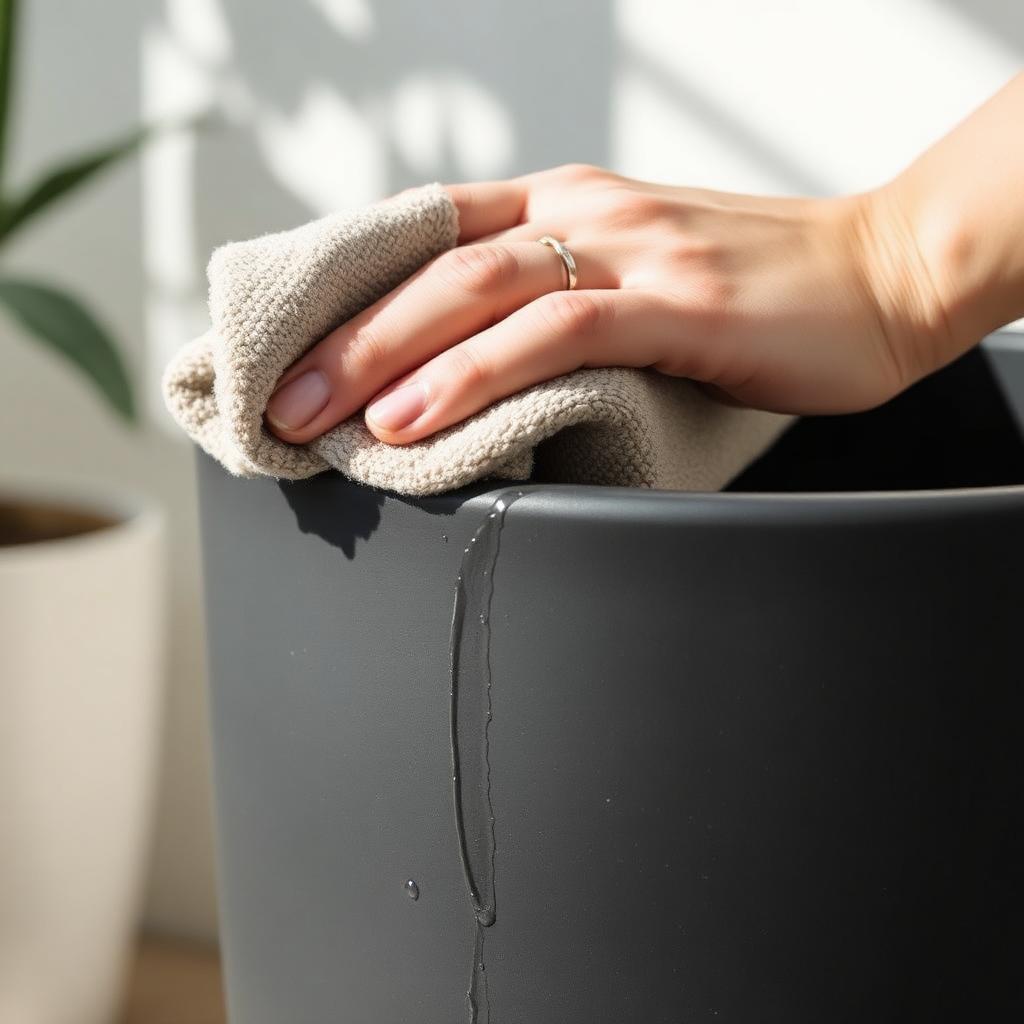
Twice a year — once in spring before planting, once in autumn after leaf fall — go over the outside of each planter with:
- Warm water in a bucket
- A soft microfibre cloth or car-detailing sponge
- A capful of pH-neutral soap (washing-up liquid is fine)
Wipe in long strokes, rinse, and buff dry with a clean cloth. That's the whole routine.
Handling scuffs and marks
Fibreglass is tough but not indestructible. Light scuffs from garden tools or furniture can usually be buffed out with a soft cloth and a dab of fibreglass polish (car-body polish works — test on the base first).
Deeper scratches
For scratches through the gel coat, a touch-up kit matched to the finish restores the surface. Contact us with your order reference and we'll supply the correct compound.
Drainage — the one thing to get right
Every planter ships drainage-ready. Before planting:
- Confirm the drainage hole is clear (some sizes ship with a knock-out plug — remove it)
- Add a 3–5cm layer of drainage crocks or coarse gravel
- Elevate the planter on pot feet if it sits on a paved surface — 15–20mm of air gap prevents the base from sitting in standing water
The compost question
Any peat-free multipurpose compost works. For long-term plantings (trees, shrubs), mix 30% loam-based John Innes No. 3 with 70% multipurpose to give the roots something to hold onto over three to five years without repotting.
Winter routine
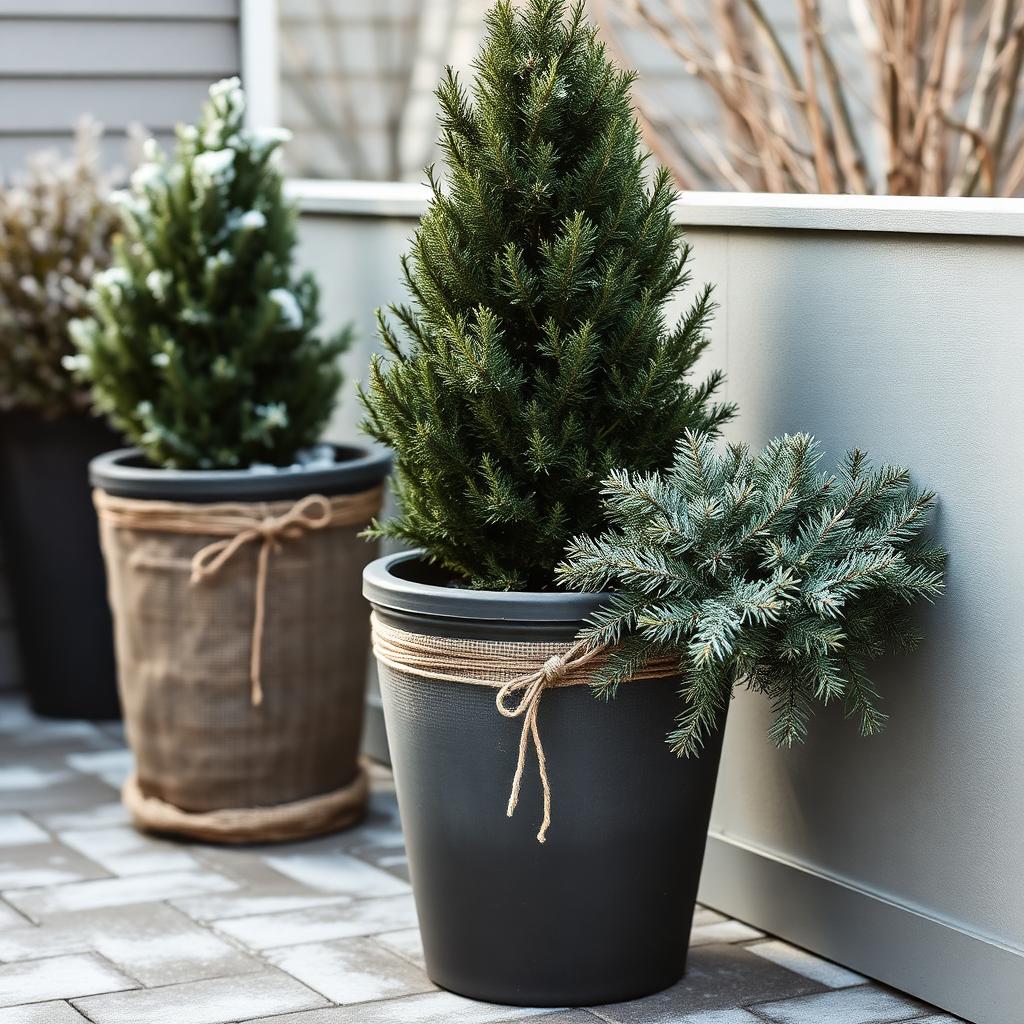
- Frost-safe by design. No wrapping required for the pot itself.
- Move exposed pots away from harsh wind funnels between buildings — the plant suffers before the planter does.
- Empty tender saucers and tip water out of any dish that could freeze and crack.
- Raise on feet if you're on decking — trapped moisture underneath stains the timber, not the pot.
When to reapply the finish
Never, in most cases. If a pot has lived in full south-facing sun for 8+ years and the gel coat begins to look chalky, a light coat of clear marine-grade UV sealer will restore the sheen. It's a 20-minute job with a foam roller.
What not to do
- Don't pressure-wash. High-pressure water can drive under the rim seal.
- Don't paint over. Standard exterior paint doesn't bond to gel coat and peels within a season.
- Don't drag across paving. Lift, or use a furniture dolly. Sliding is what puts long scratches into bases.
Look after them lightly and fibreglass planters outlast almost anything else in the garden.