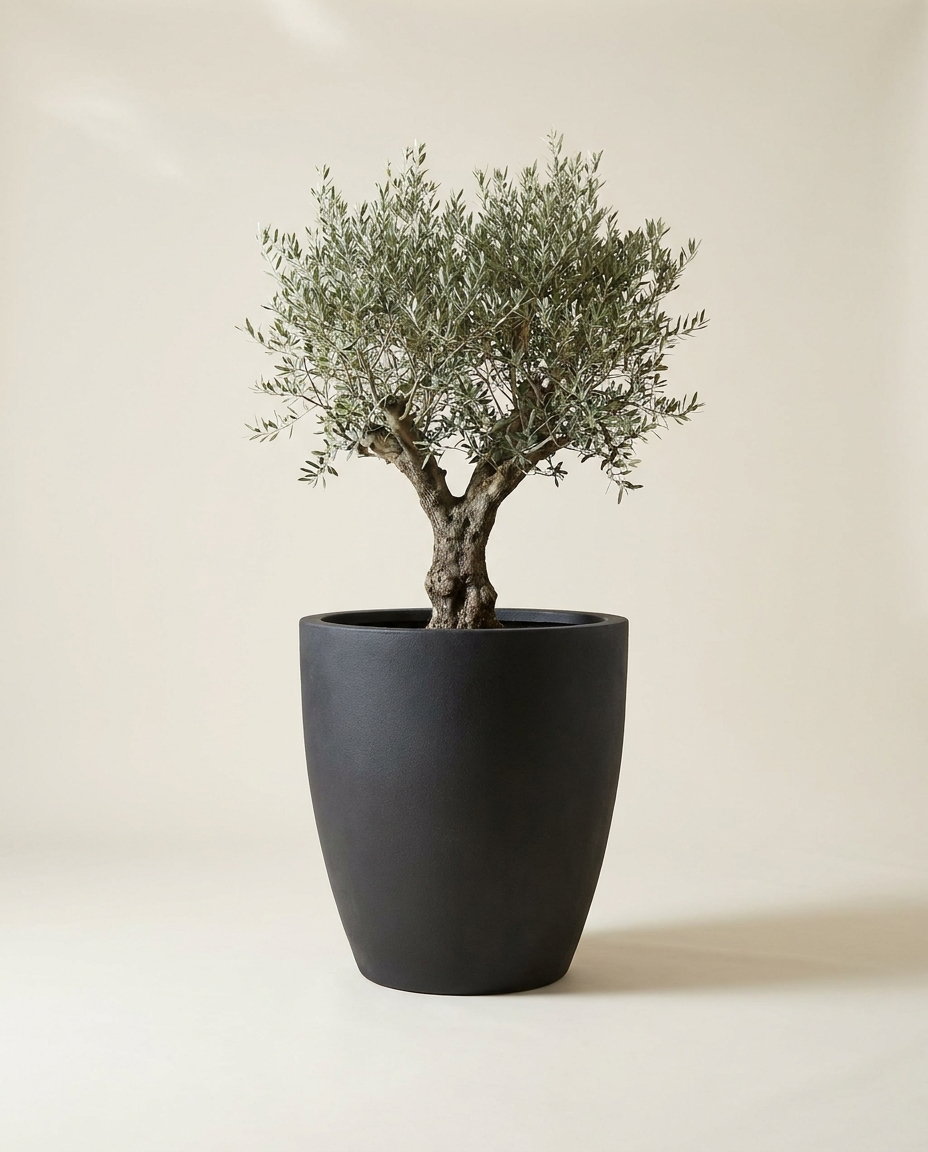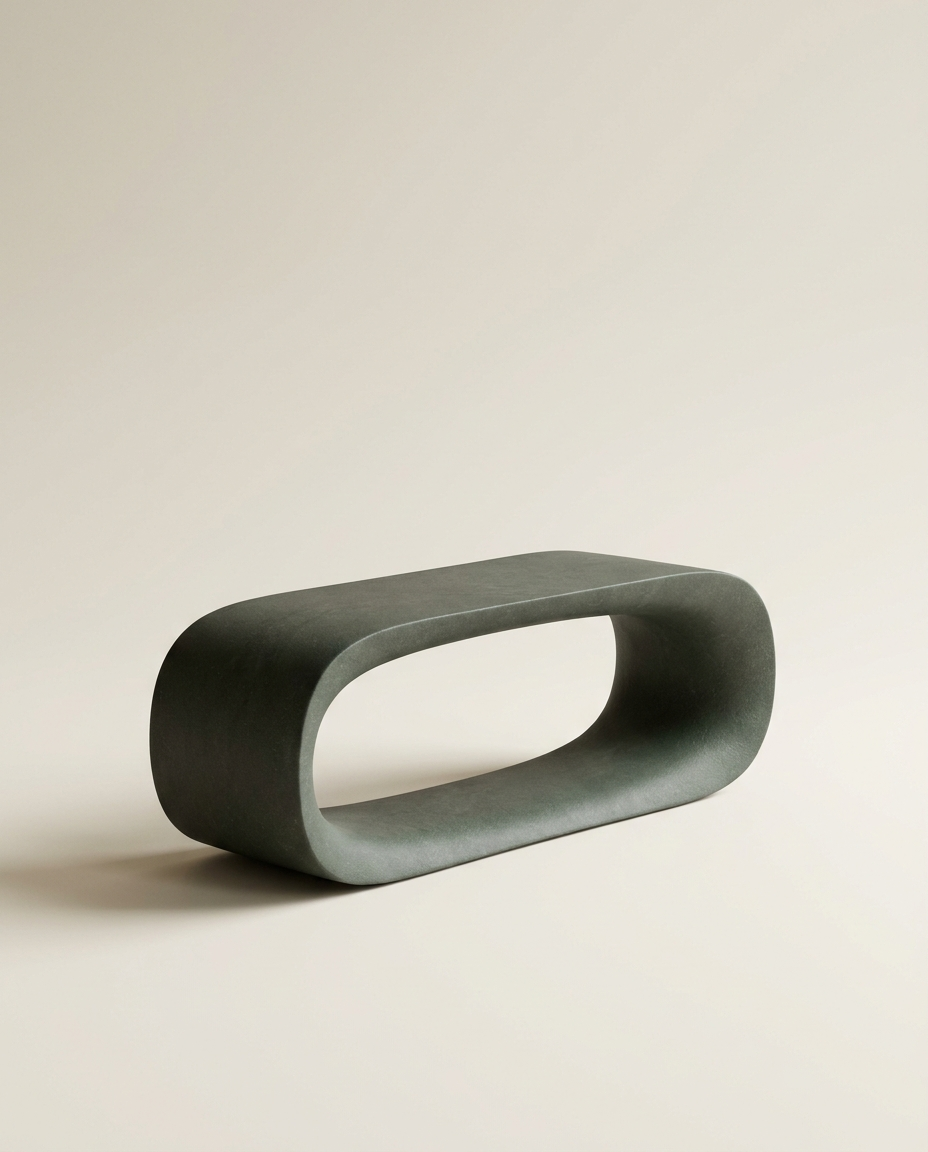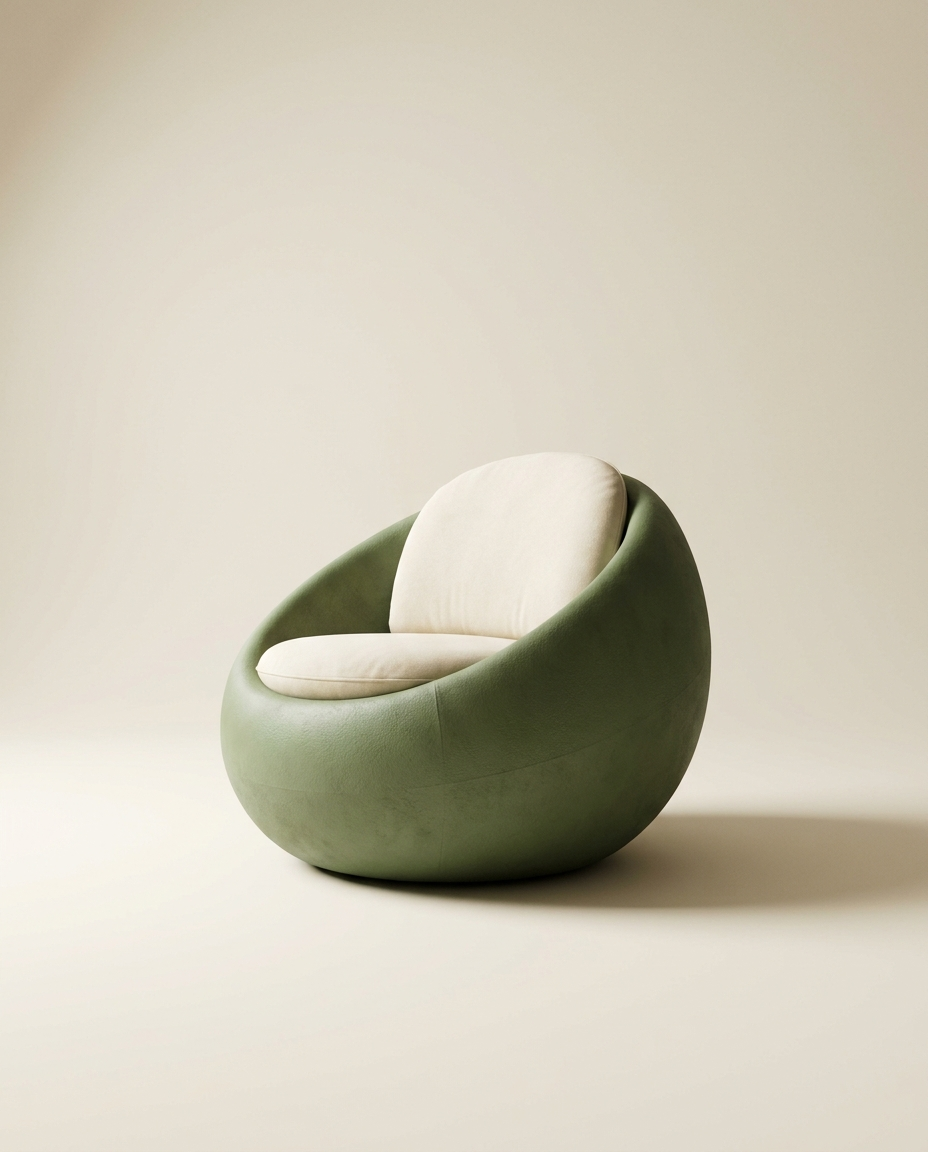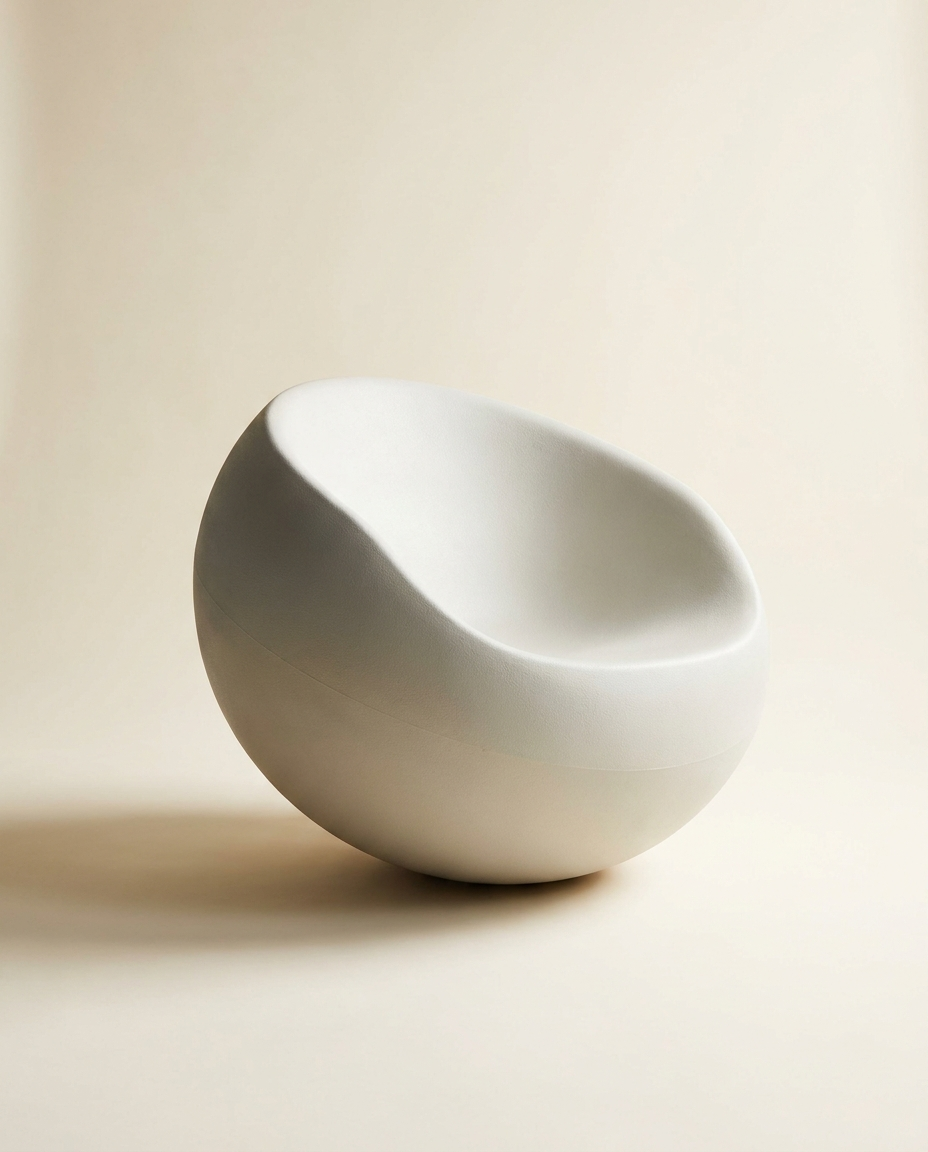
Designer garden planters · Fast UK delivery · UK trade welcome
Pots & PlantersUK · DESIGNER GARDEN PLANTERS
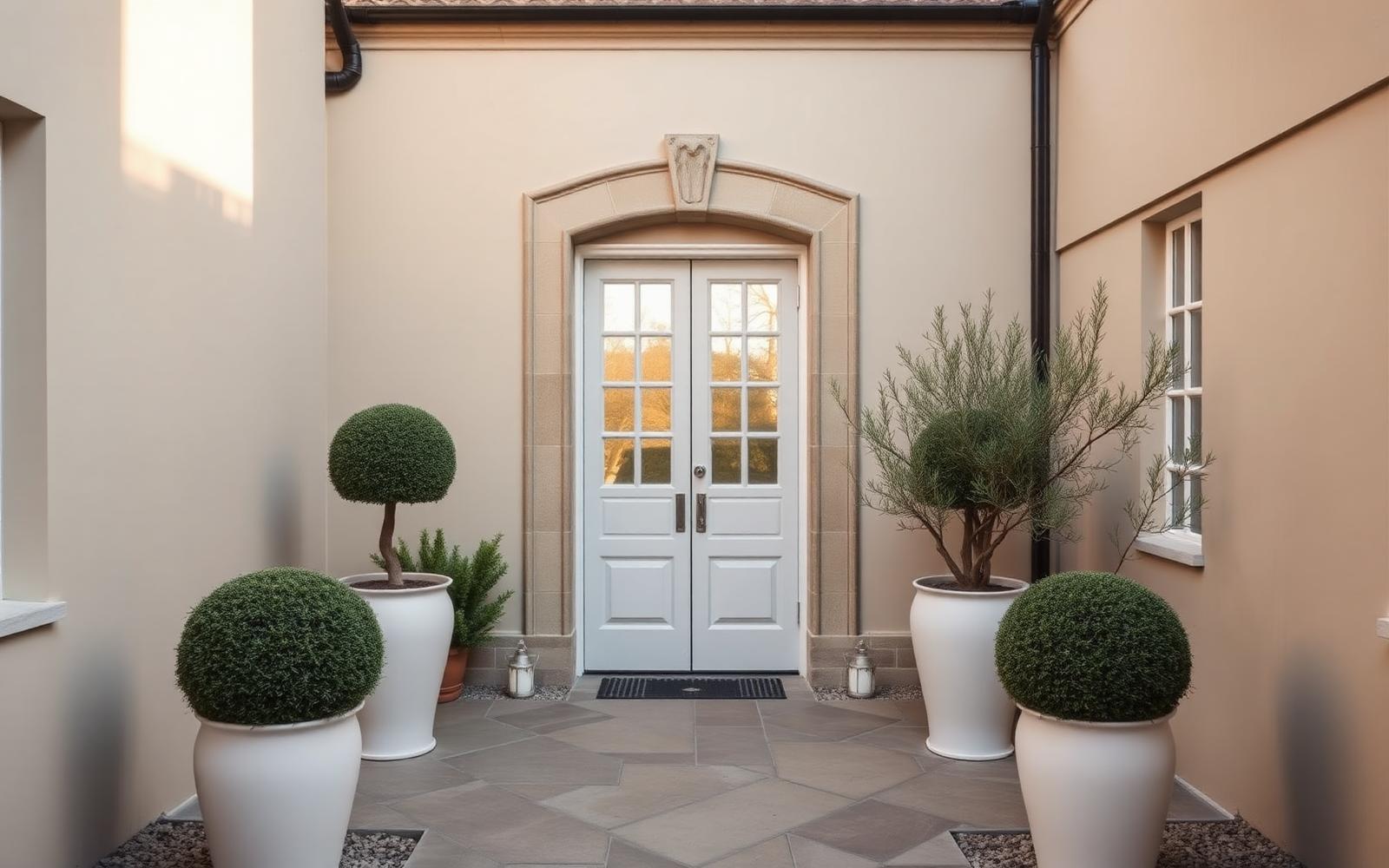
A British courtyard with pairs of large fibreglass planters flanking a stone doorway
Inspiration & advice

Where to place pots, and how to make them look considered.

A designer's field guide to placing, scaling and planting pots in a real British garden — for front doors, patios, balconies, long paths and quiet corners.

The six principles

Before you buy a single pot.

Good pot placement is a handful of rules, applied with restraint. Learn these once and every planter you place afterwards will look intentional.

01

Start with a focal point

Every garden view needs somewhere for the eye to land. A single oversized planter at the end of a path, framing a door, or anchoring a corner does more work than a scattering of smaller pots. Decide the focal point first — everything else supports it.

02

Work in odd numbers

Groupings of three or five feel natural; pairs feel formal. Use pairs to frame architecture (a doorway, steps, a gate). Use odd-numbered clusters everywhere else — on patio corners, beside seating, or softening a hard edge.

03

Vary height, repeat material

In a cluster, choose planters of three clearly different heights: a tall, a medium and a low. Keep the material or colour family consistent so the group reads as one composition, not a collection.

04

Scale up, not down

The most common mistake is planters that are too small. As a rule of thumb, a planter should be at least one third the height of the wall or feature behind it. Undersized pots make a house look larger and unfriendly; generous ones make it look considered.

05

Give plants their pot

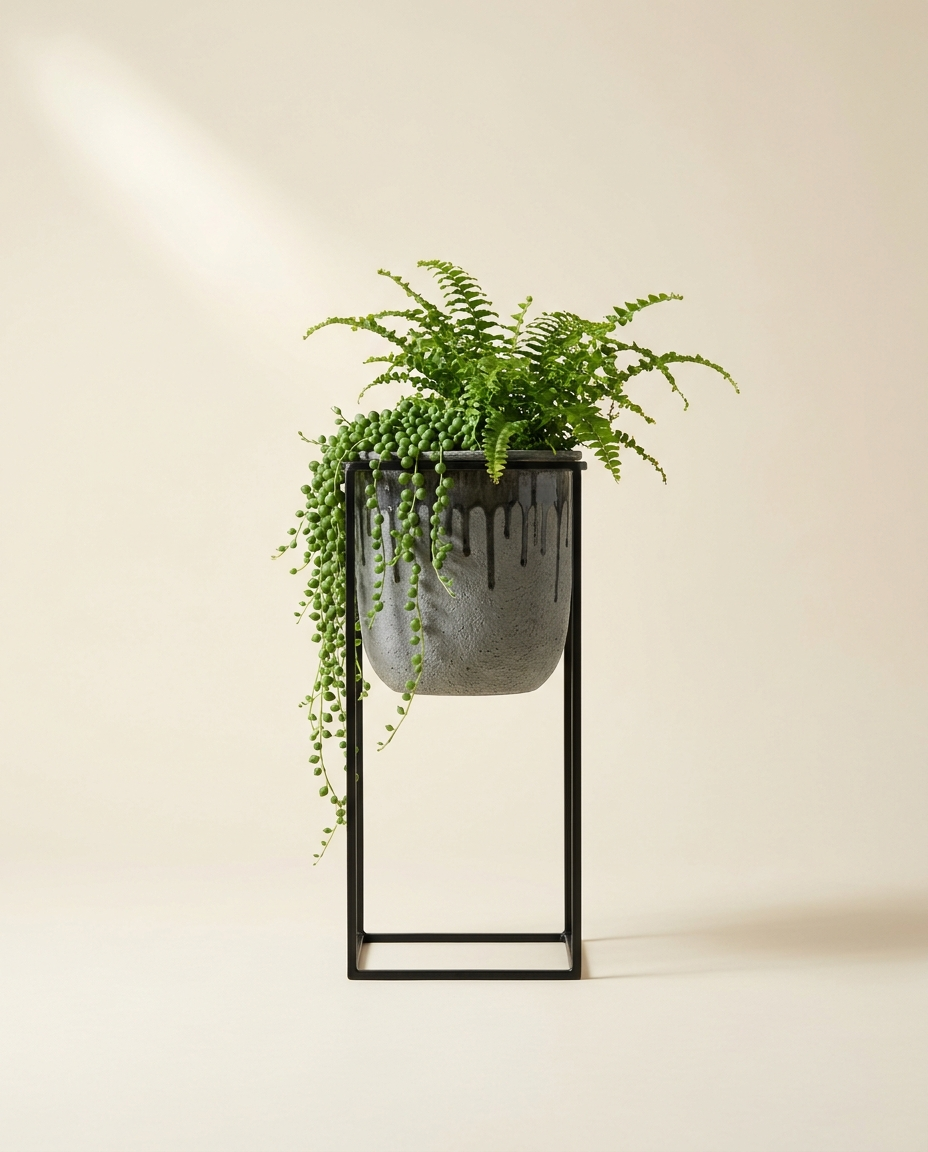
The plant should read as roughly 1.5 to 2 times the height of its container for trees and structural specimens, and about the same height as the pot for shrubs and grasses. Trailing plants should fall to at least a third of the pot's height.

06

Leave room to breathe

Negative space is a design tool. A single planter on an empty terrace is more powerful than four crowded together. Resist the urge to fill every corner — the pause between pieces is what makes each one feel intentional.

Room by room

What to put where.

The same planter can be beautiful or awkward depending on where it lands. Here is how we place pots in the five settings we work with most often.

Frame the entrance in matched pairs
The front door

Frame the entrance in matched pairs

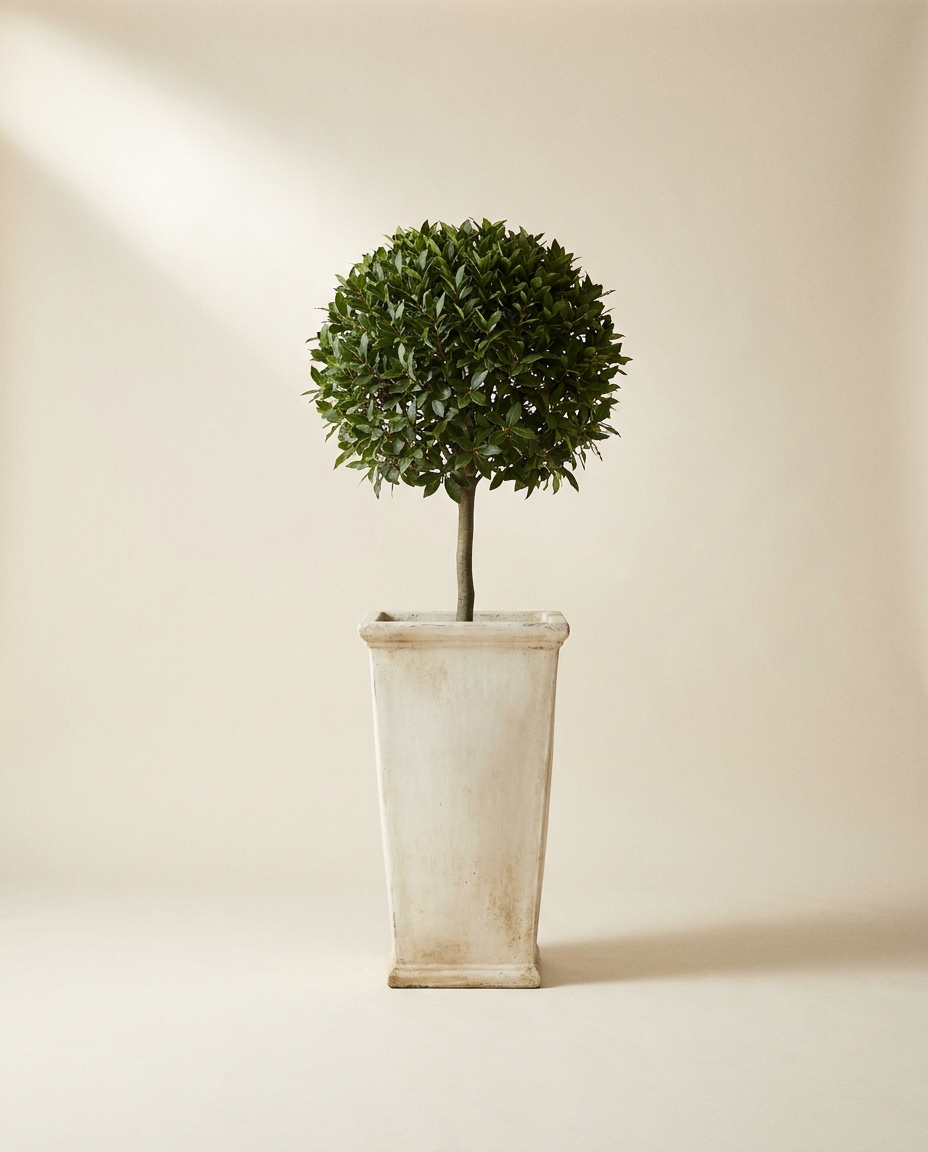
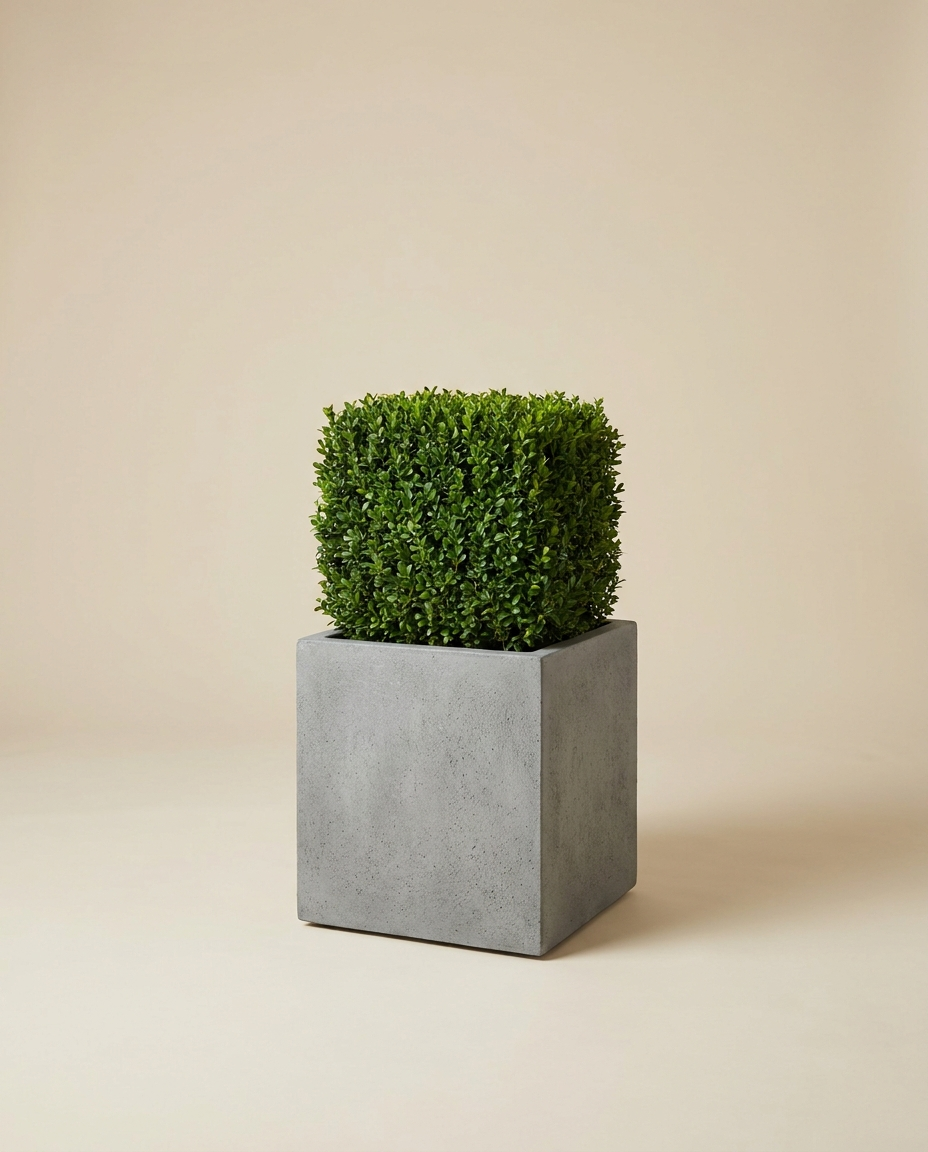
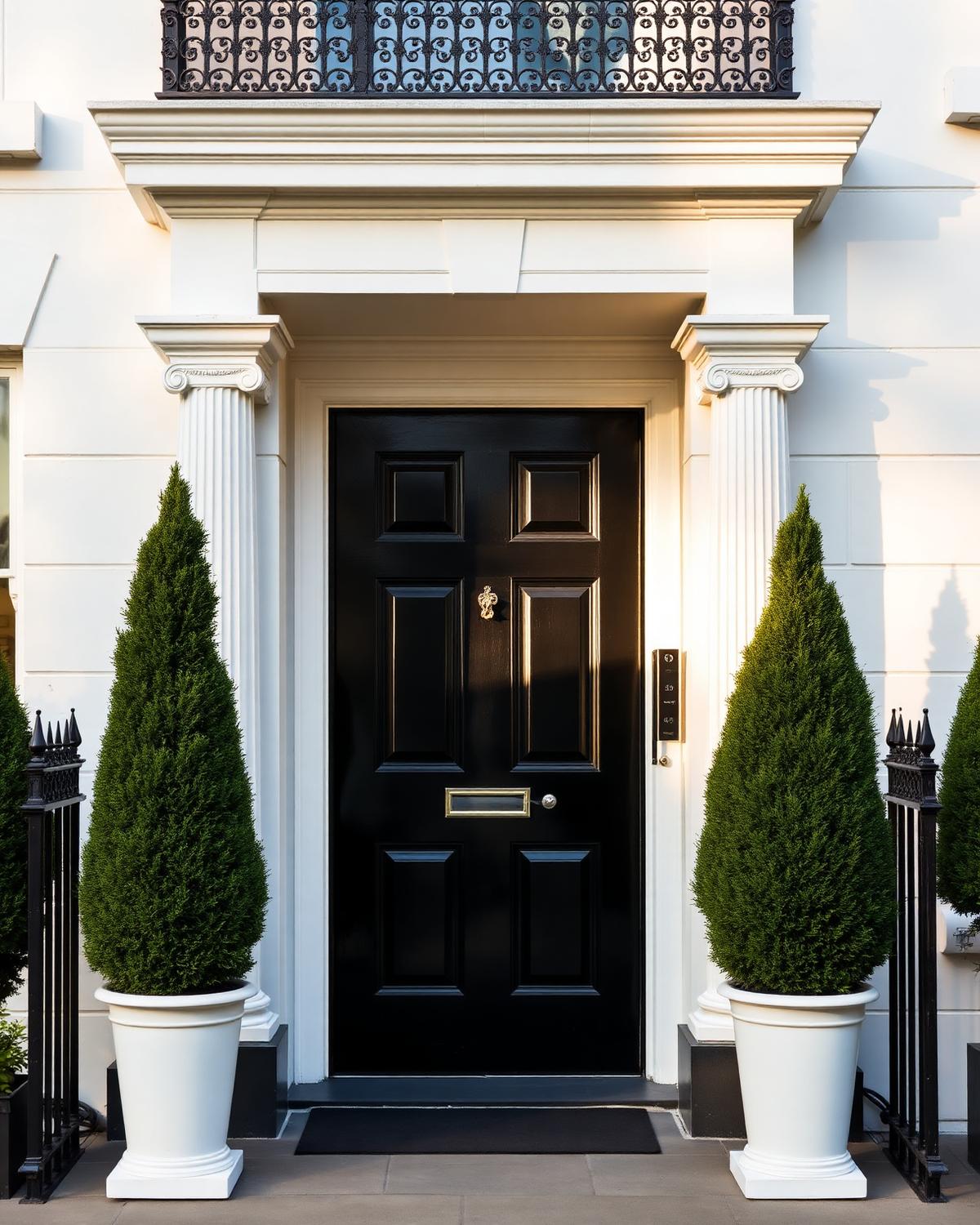
The front door is the one place where symmetry always works. Choose two identical planters — tall and slender rather than wide — and plant them identically with clipped bay, cone-shaped conifers, olive standards or box balls. The pots should reach roughly hip height when planted; anything shorter looks apologetic beside a full-size door. Set them just outside the door frame, not against the walls, so the door reads as the centre of a composition.

  • Match pots exactly — this is not the place for variety.
  • Choose evergreen, architectural plants that look good in every season.
  • Uplight from below at night for a hotel-forecourt effect.
Anchor the corners, keep the middle clear
The patio

Anchor the corners, keep the middle clear

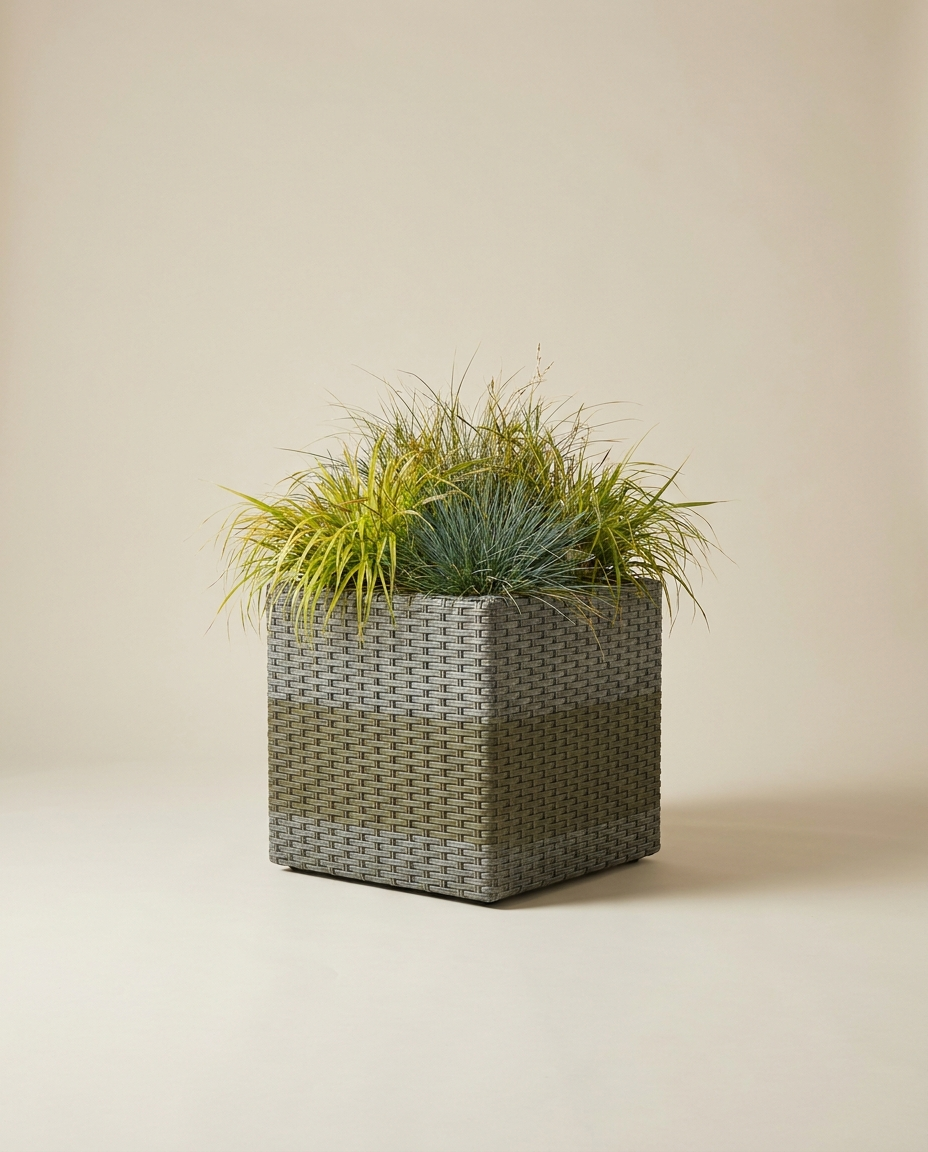
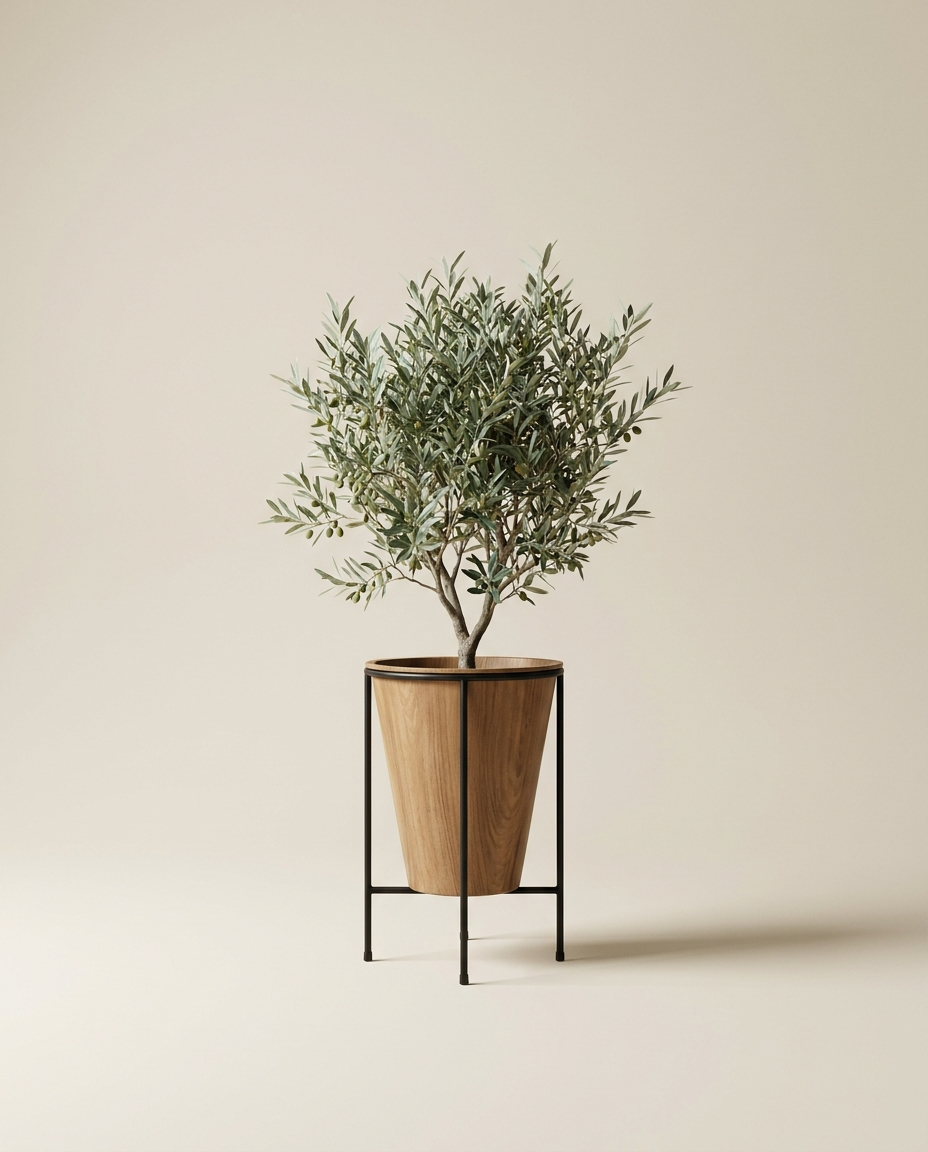
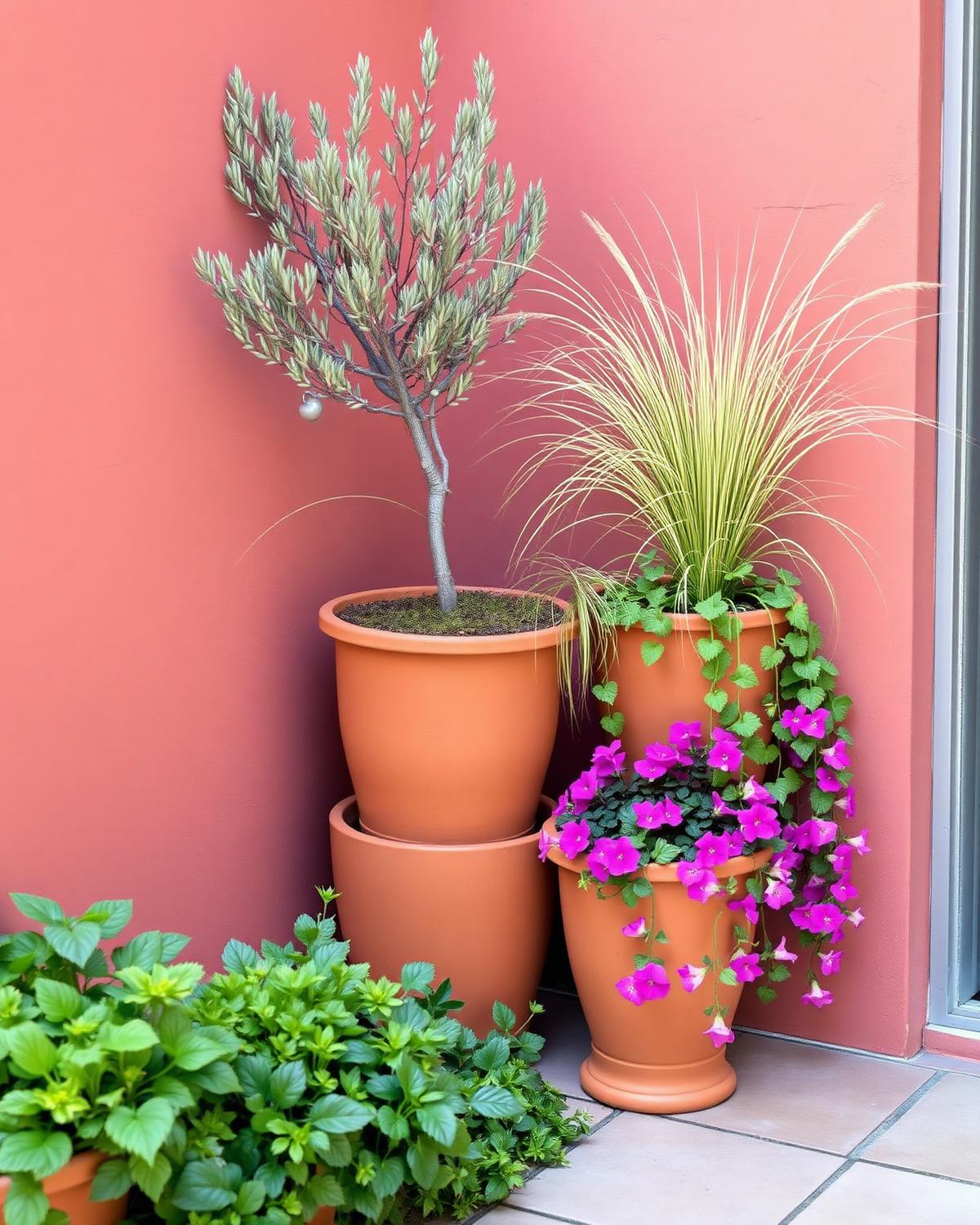
A patio wants its perimeter defined and its centre kept open for furniture and movement. Cluster planters in the corners and against blank walls in groups of three: one tall structural piece (an olive tree, an acer, a slim conifer), one mid-height planted with a grass or shrub, and one low pot with trailing or seasonal colour. This layered planting draws the eye upwards and makes even a small patio feel like a garden room.
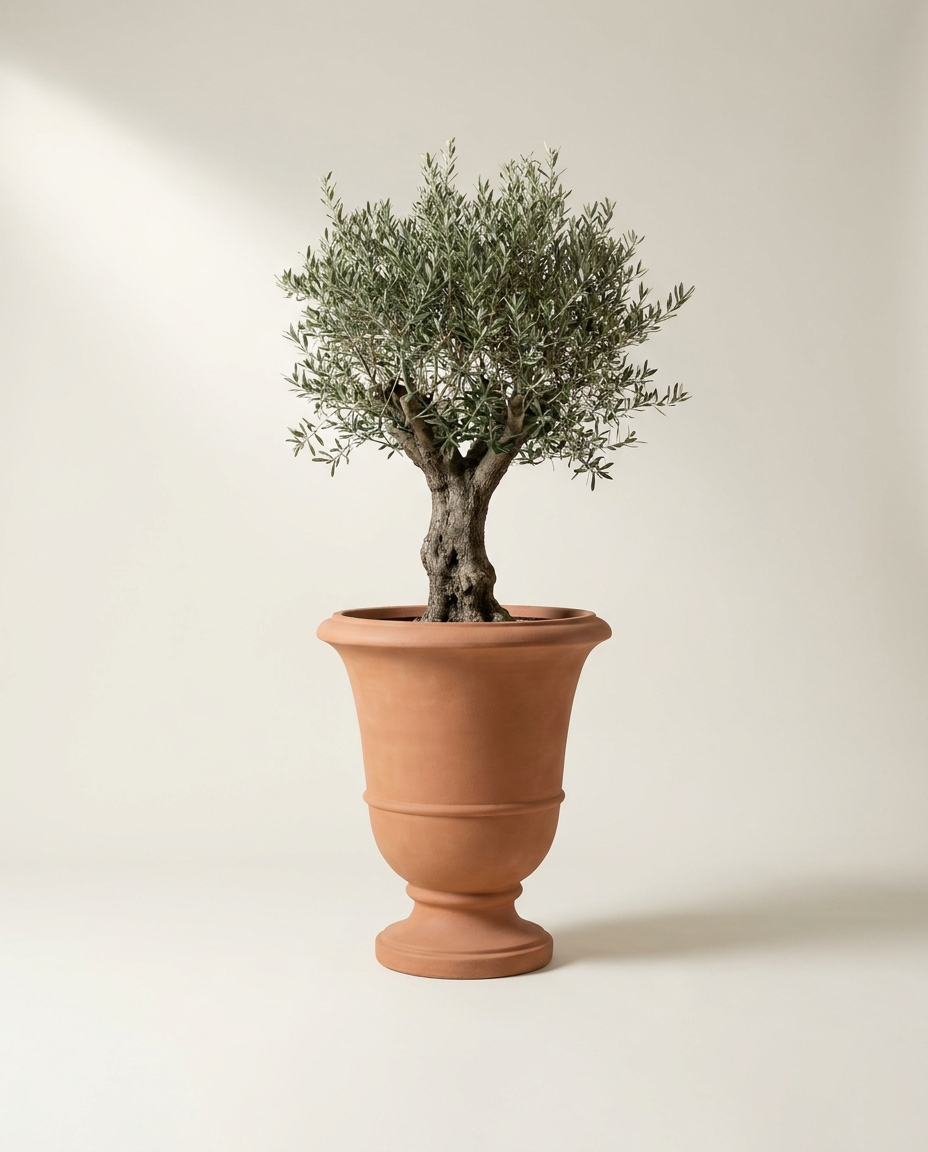
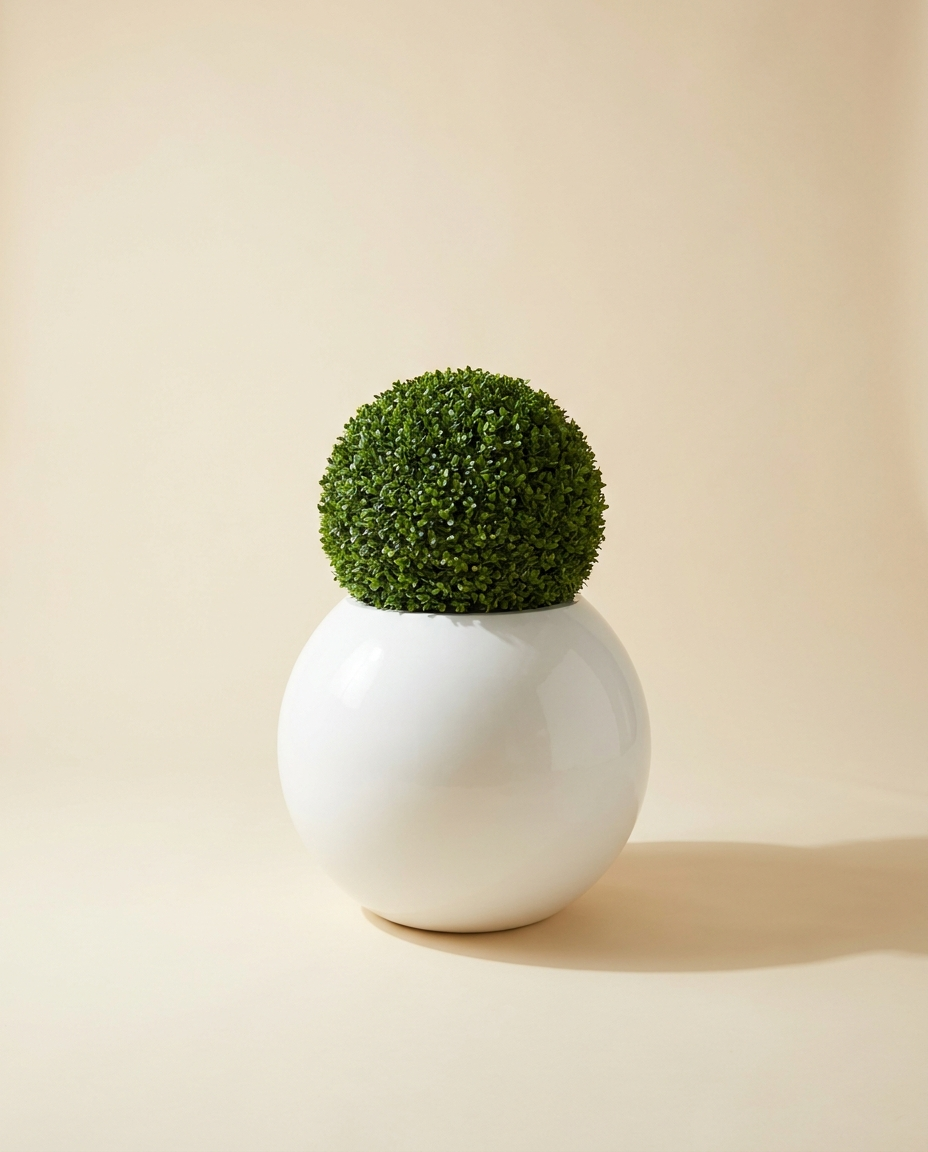
  • Keep clusters against the edges — never marooned in the middle.
  • Repeat one plant across the whole patio to tie the scheme together.
  • Raise pots on pot feet on paving so water can drain and the stone stays clean.
Fewer, taller pots — not more, smaller ones
Small balconies & courtyards

Fewer, taller pots — not more, smaller ones

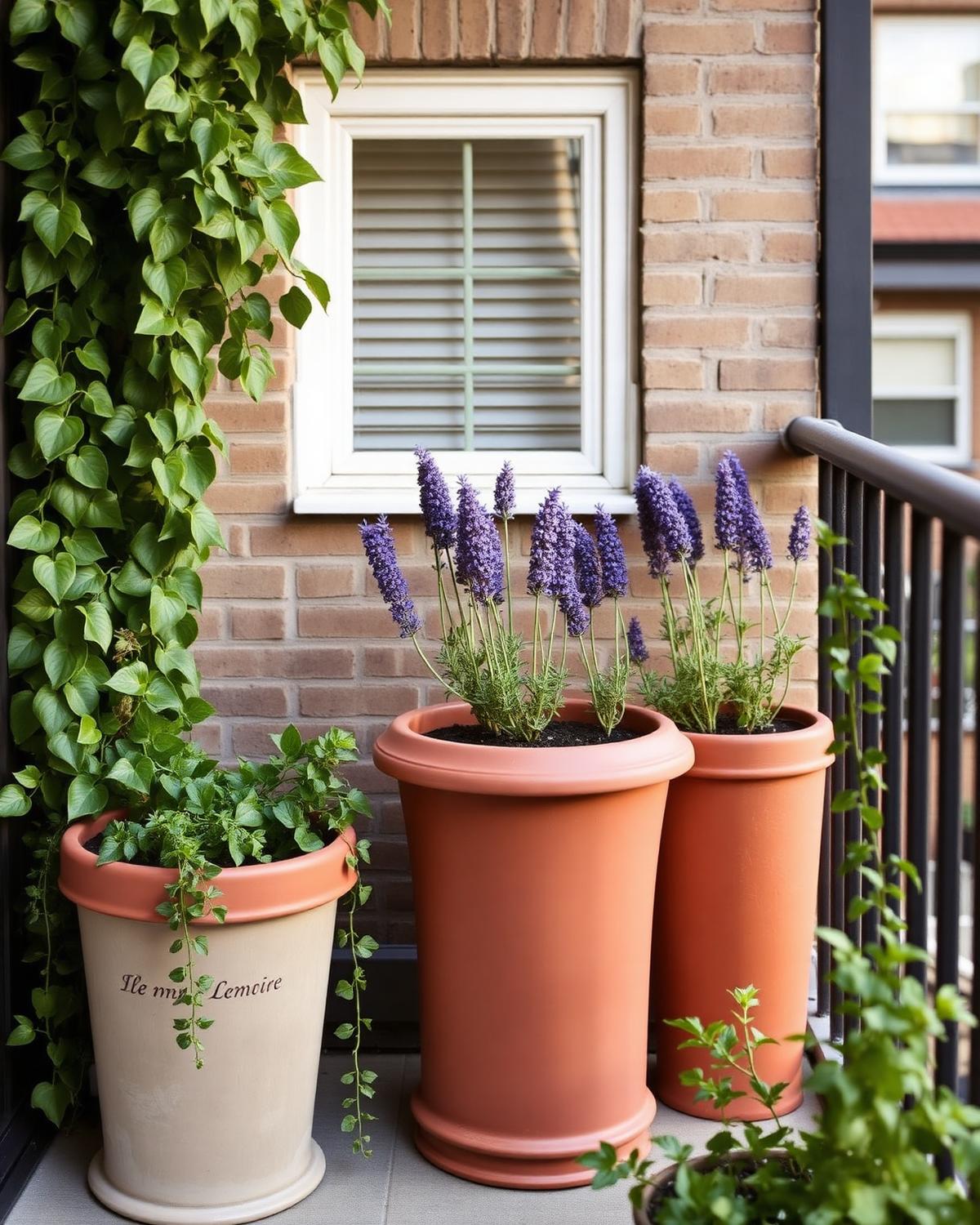
On a balcony, the instinct is to line the railing with small pots. Resist it. Two or three tall, narrow planters against the back wall read as garden architecture; a row of little ones reads as clutter. Choose colours that recede — warm terracotta, chalky cream, deep charcoal — rather than glossy brights, and let one climbing or trailing plant do the heavy lifting for softness.

  • Tall tapered pots gain height without eating floor space.
  • Weight matters on balconies — fibreglass gives you the size without the load.
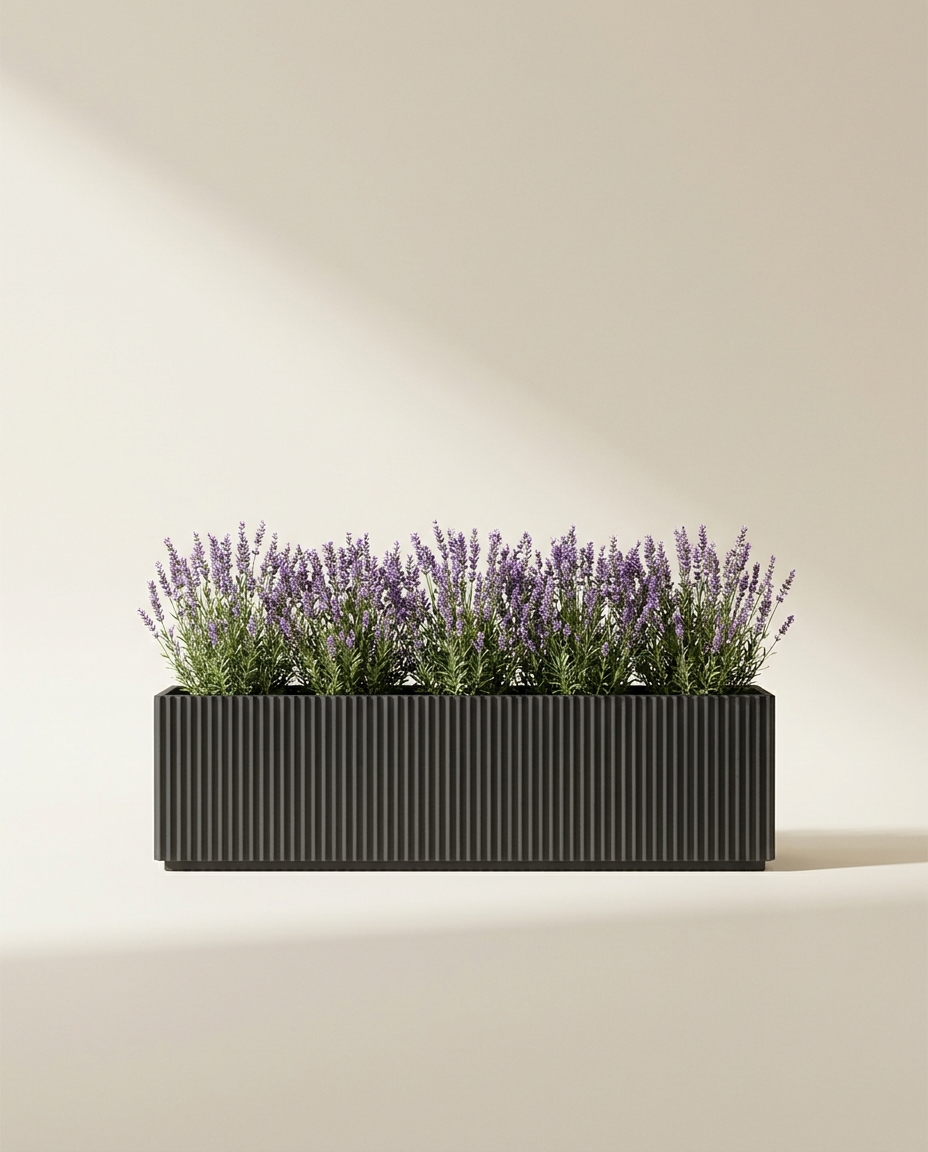
  • Wind-tolerant planting: lavender, rosemary, ornamental grasses, olive.
Rhythm along a route, punctuation at the end
Paths & long views

Rhythm along a route, punctuation at the end

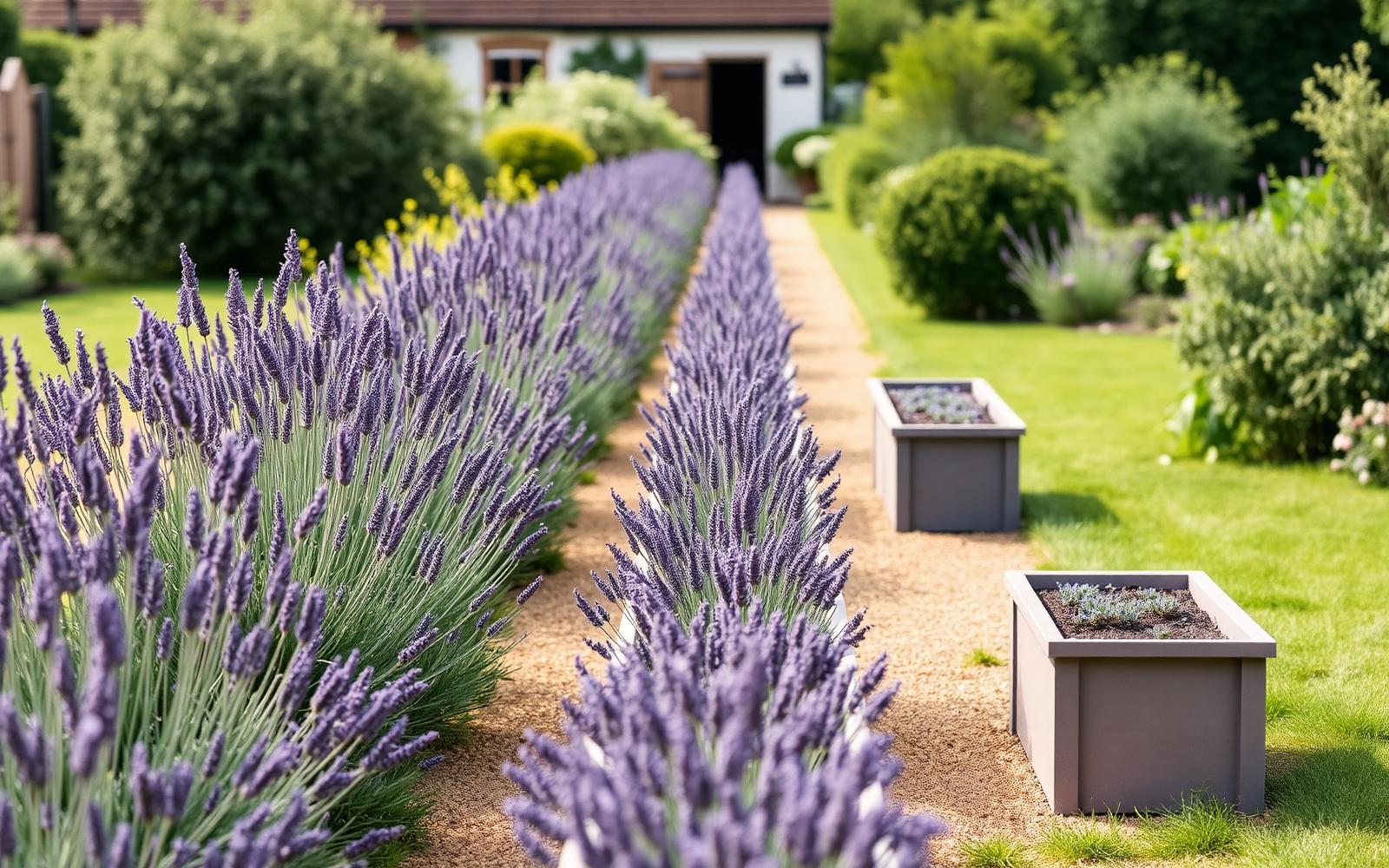
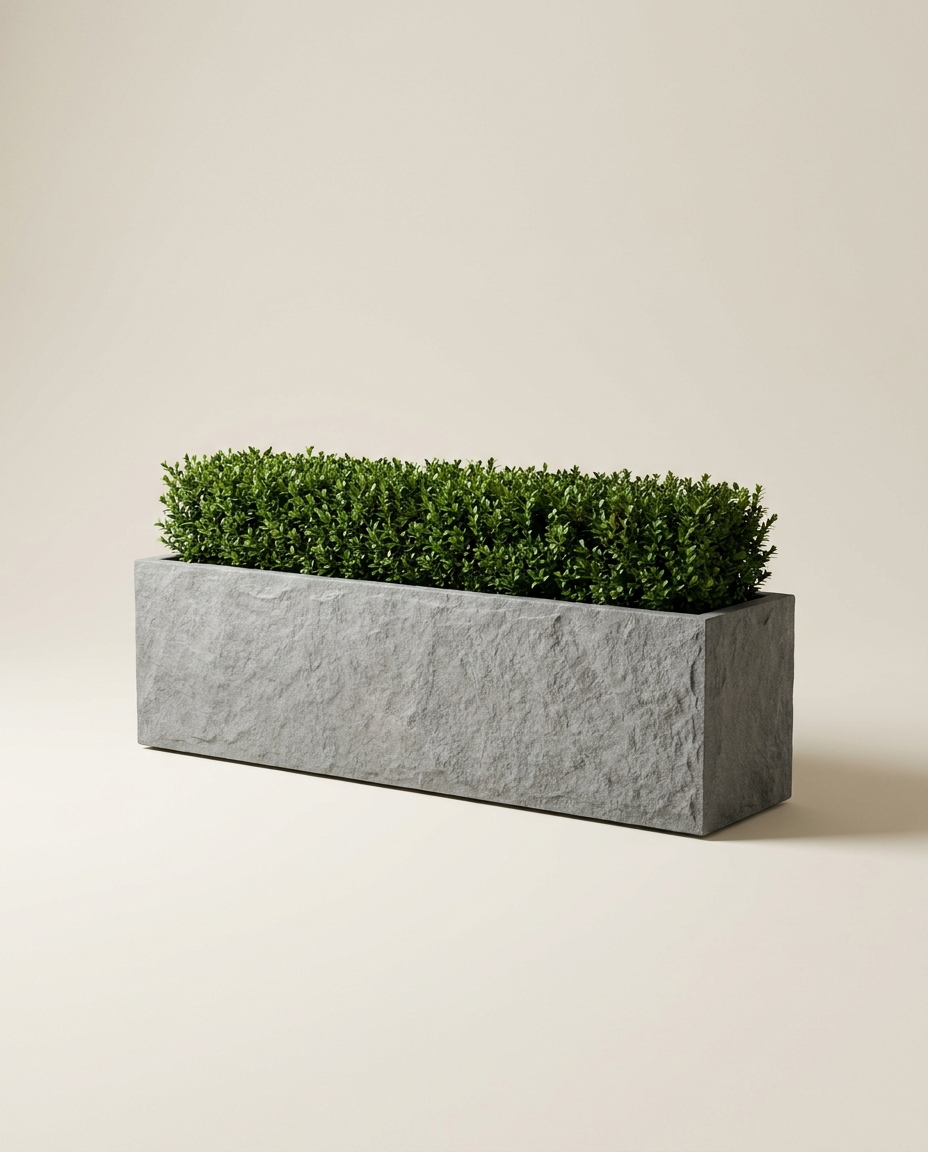
A long path or lawn edge is a chance to use repetition. Space matching rectangular troughs or identical urns at even intervals along the route — every 1.5 to 2 metres works for most gardens — and place a single larger planter at the terminus. The eye will travel down the rhythm and rest on the destination, making the garden feel longer and more considered.

  • Keep the repeated planters simple; save the drama for the endpoint.
  • Low troughs edged with lavender or box create a soft hedge without permanence.
  • The end-of-path pot should be one full size larger than the ones along it.
One big piece beats a dozen small ones
Terraces & modern gardens

One big piece beats a dozen small ones

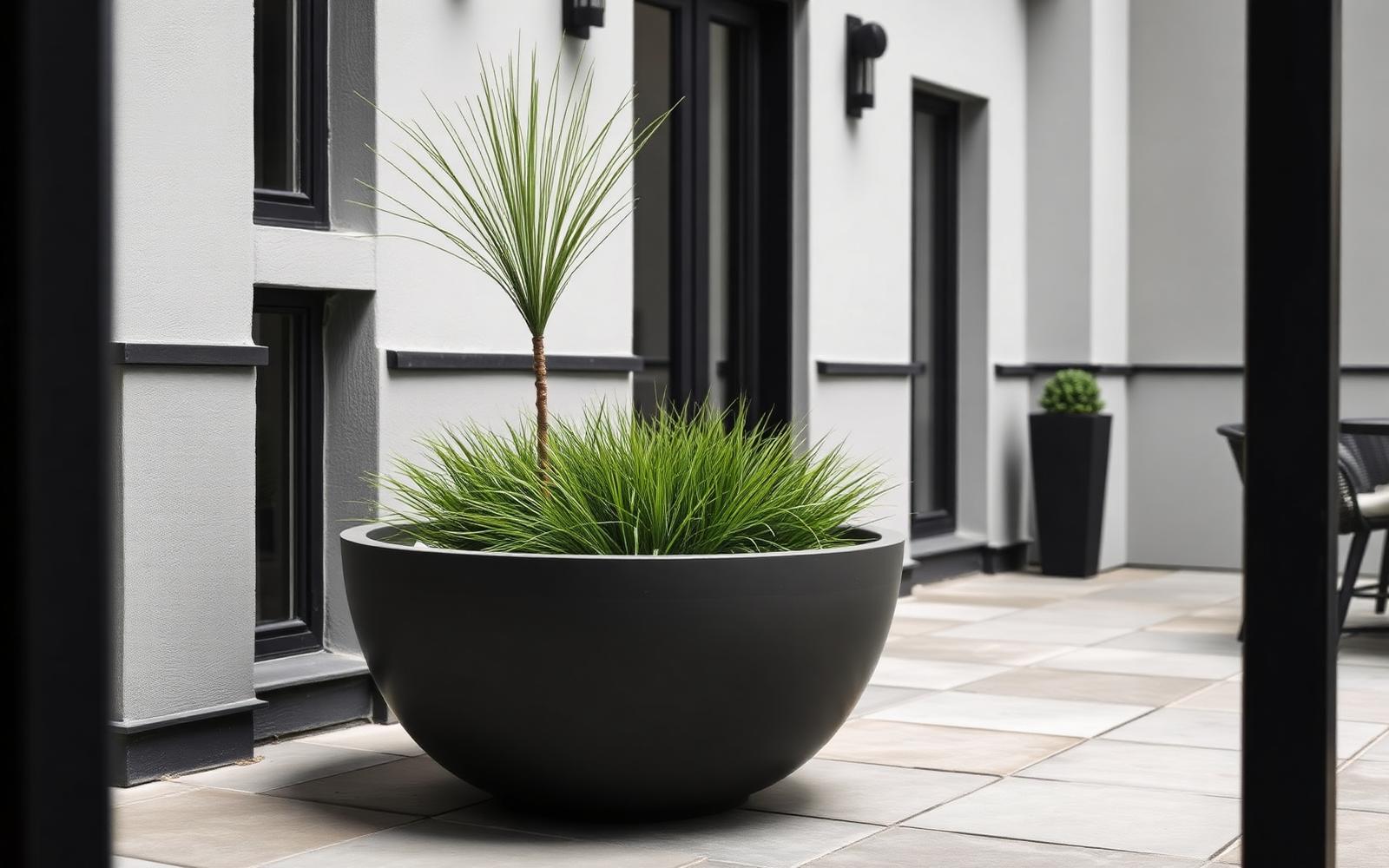
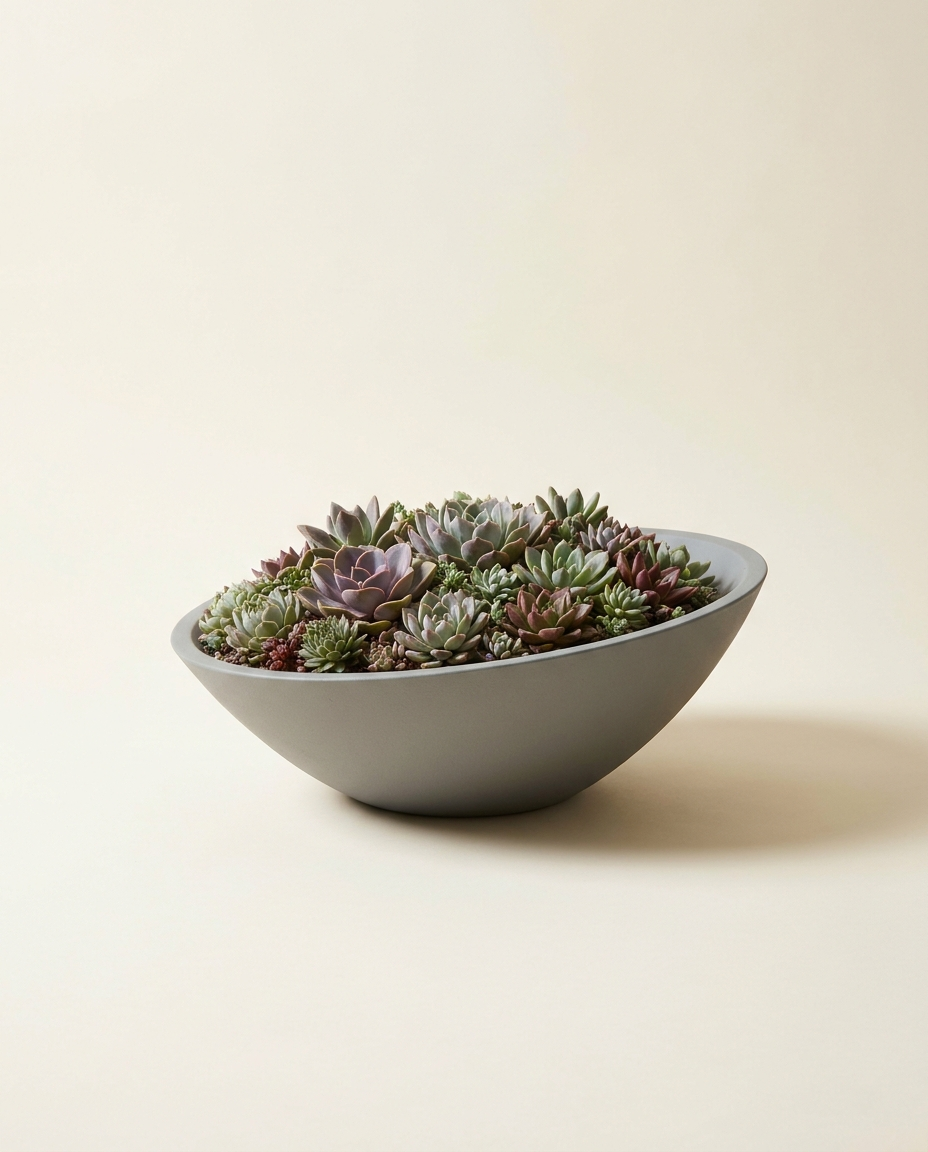
On a contemporary terrace, restraint reads as luxury. A single oversized bowl or trough — deliberately outsized against the paving — planted with one architectural species (a Japanese maple, a fan palm, a mass of grass) will do more than any collection. The planter itself is the sculpture; the plant is its material.

  • Choose a matt finish — gloss dates quickly and shows every scratch.
  • Match the planter colour to a hard-landscape element already on site.
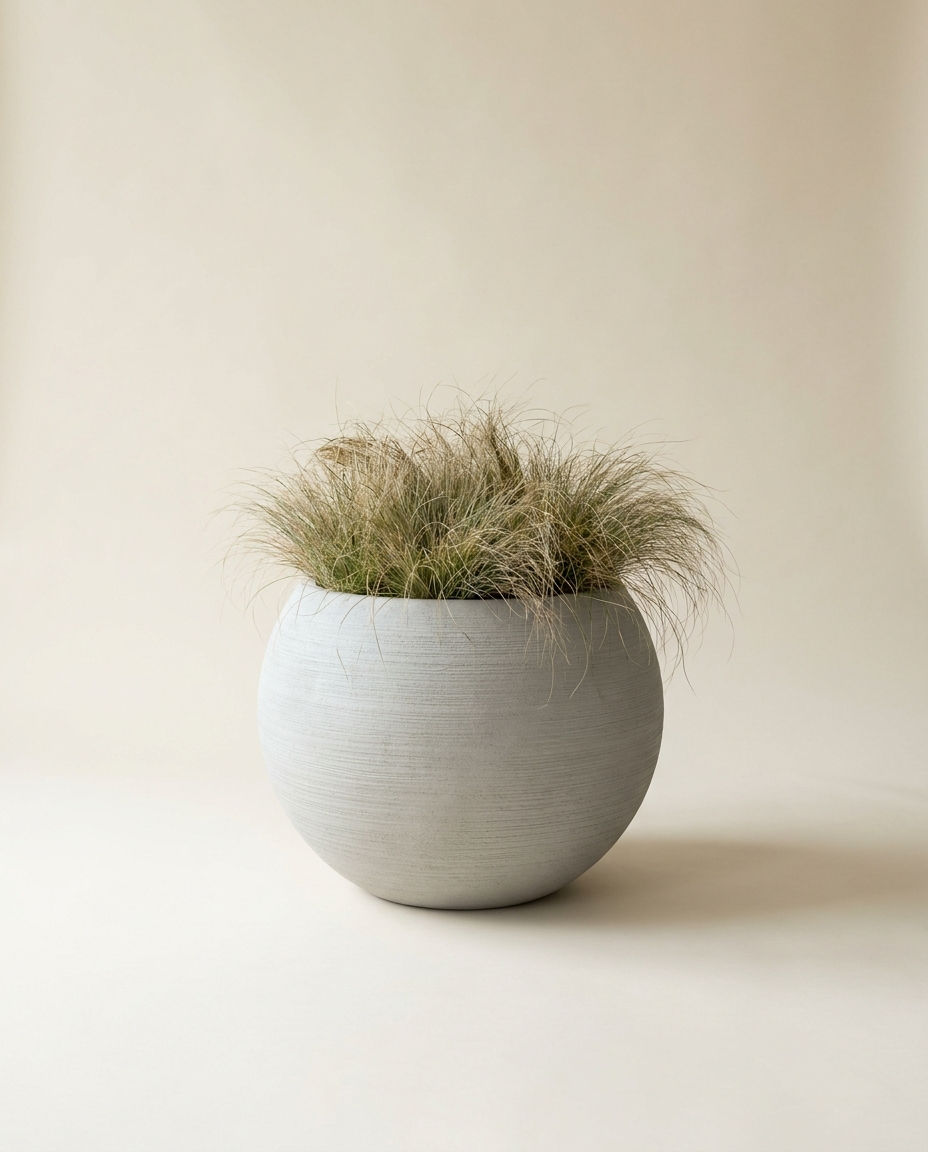
  • Under-plant the specimen with a low mounded grass to soften the rim.
Planting

Six planting schemes that always work.

Choose the mood first, then the plants. Every scheme here uses a structural anchor, a mid-layer, and something soft that trails or moves.

Formal evergreen

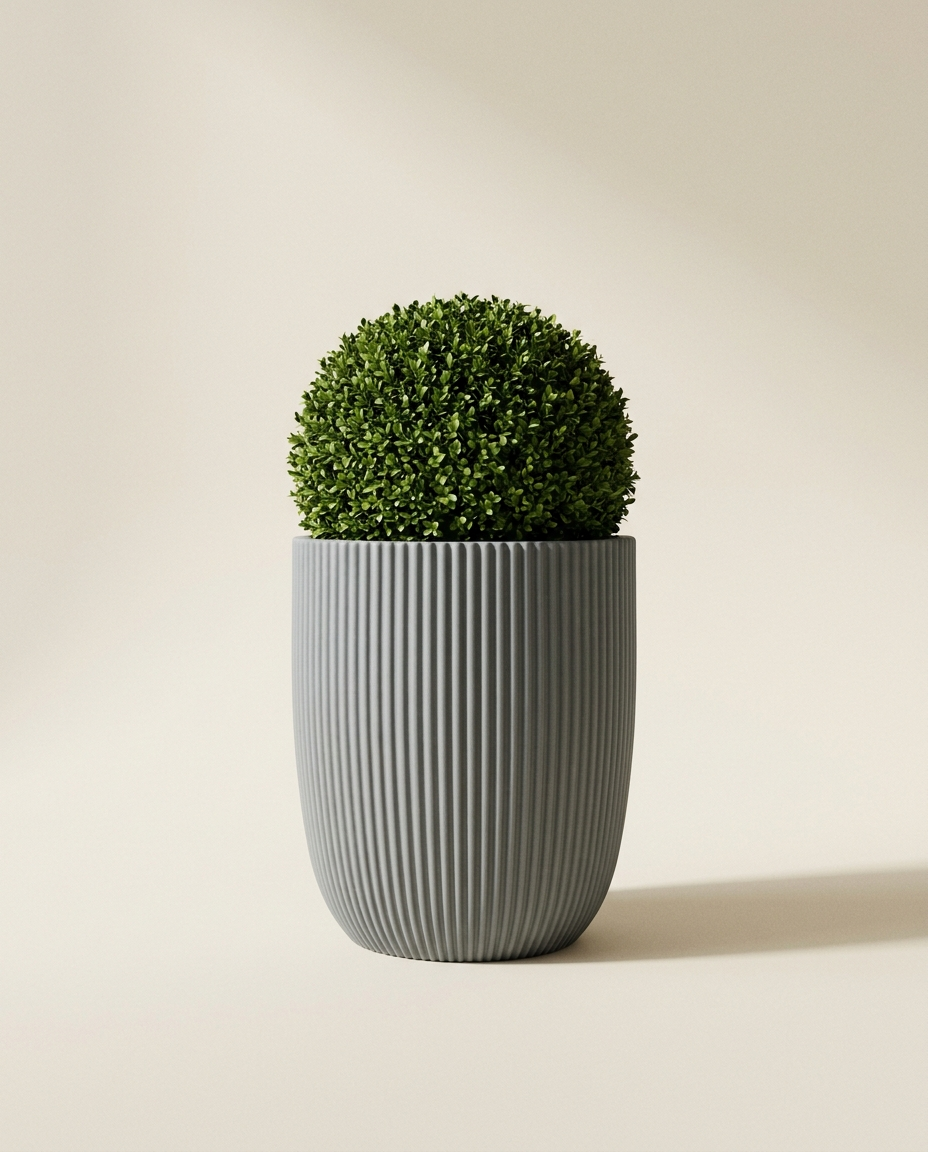
Clipped box ball · Bay standard · Trailing ivy

Front doors, hotel forecourts, listed buildings

Mediterranean

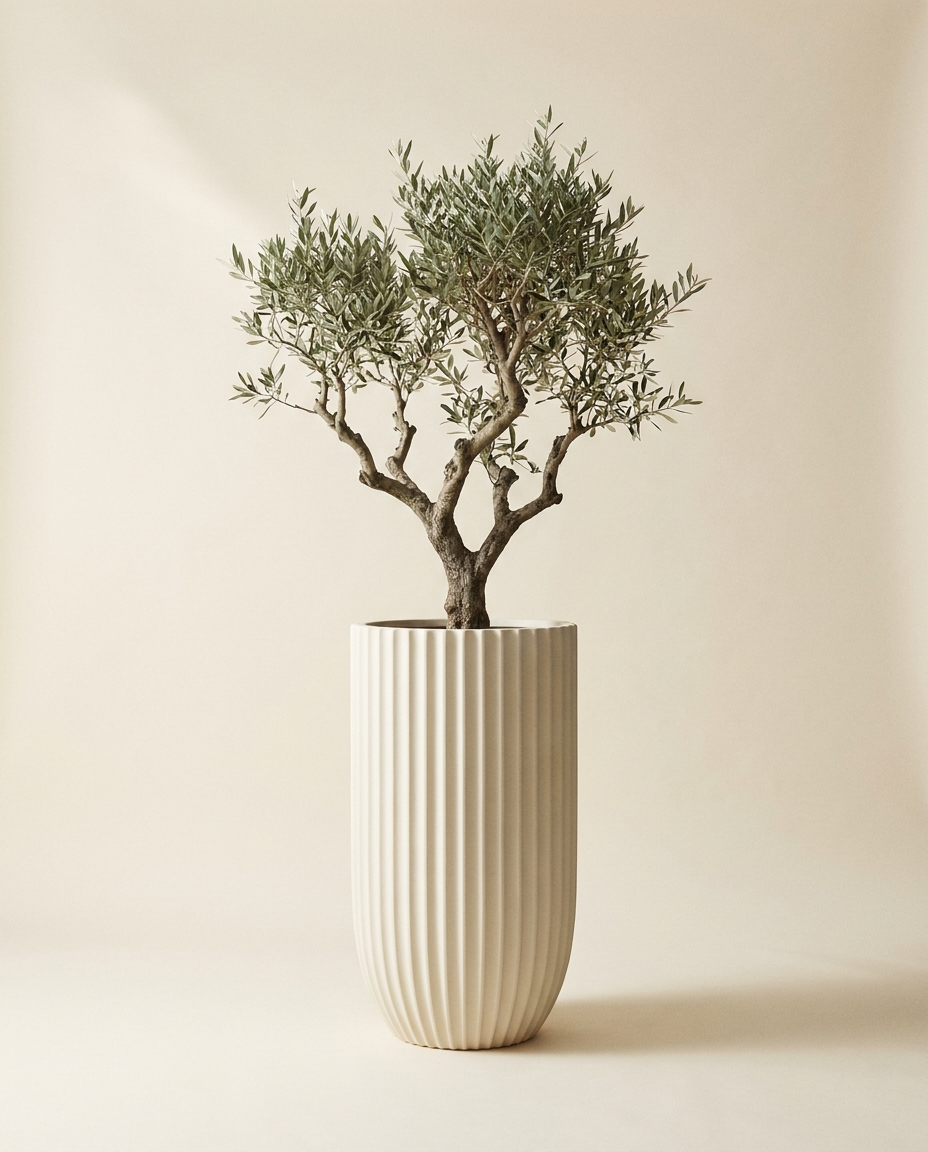
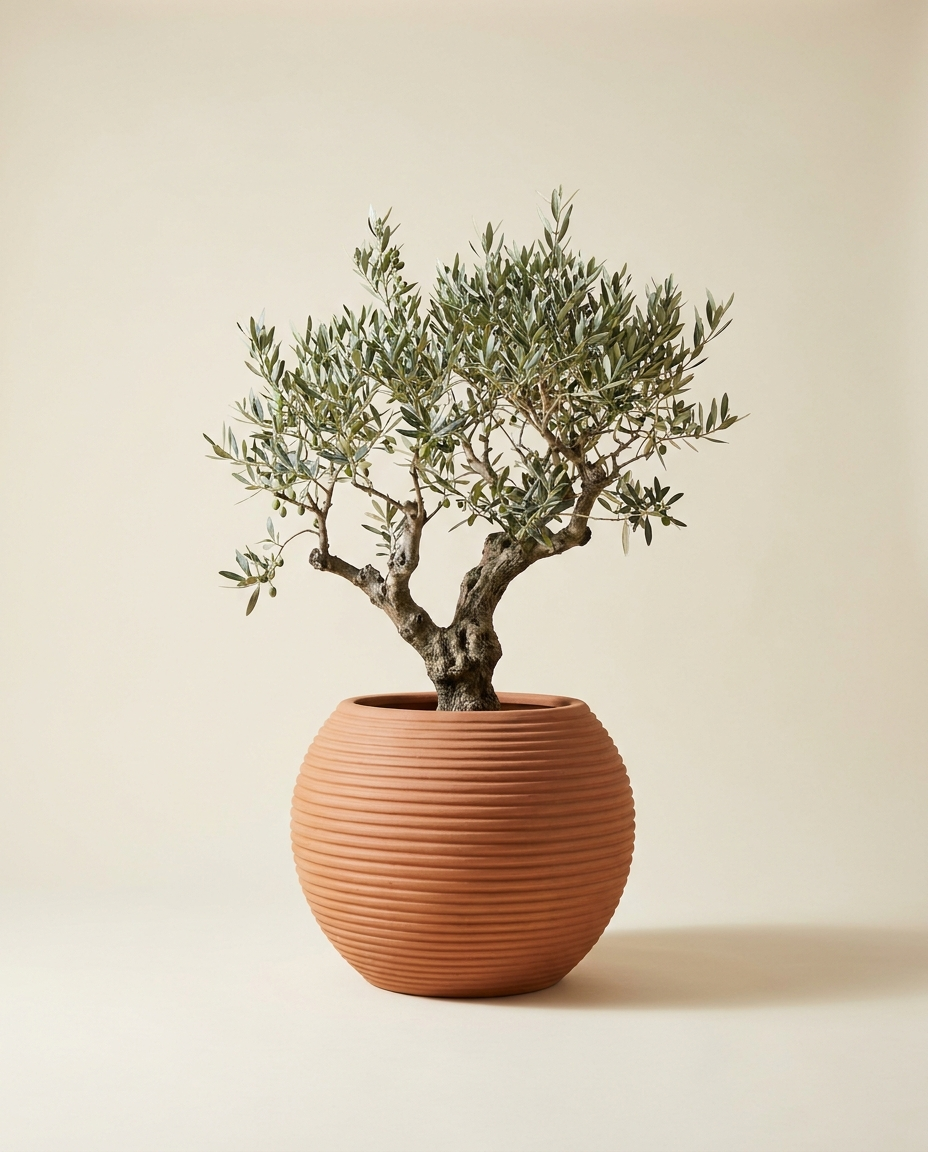
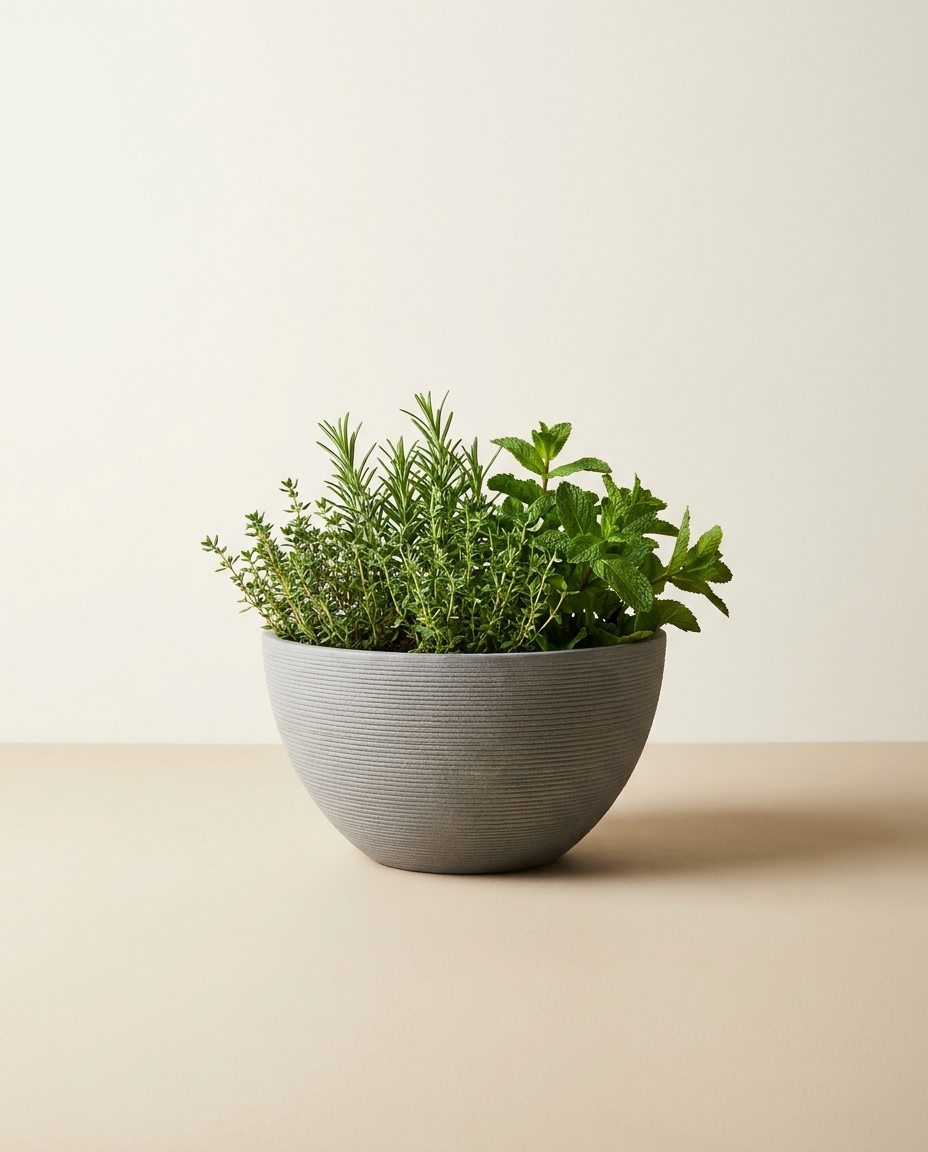
Olive tree · Lavender · Rosemary · Trailing pelargonium

South-facing patios, warm walls, gravel gardens

Architectural modern

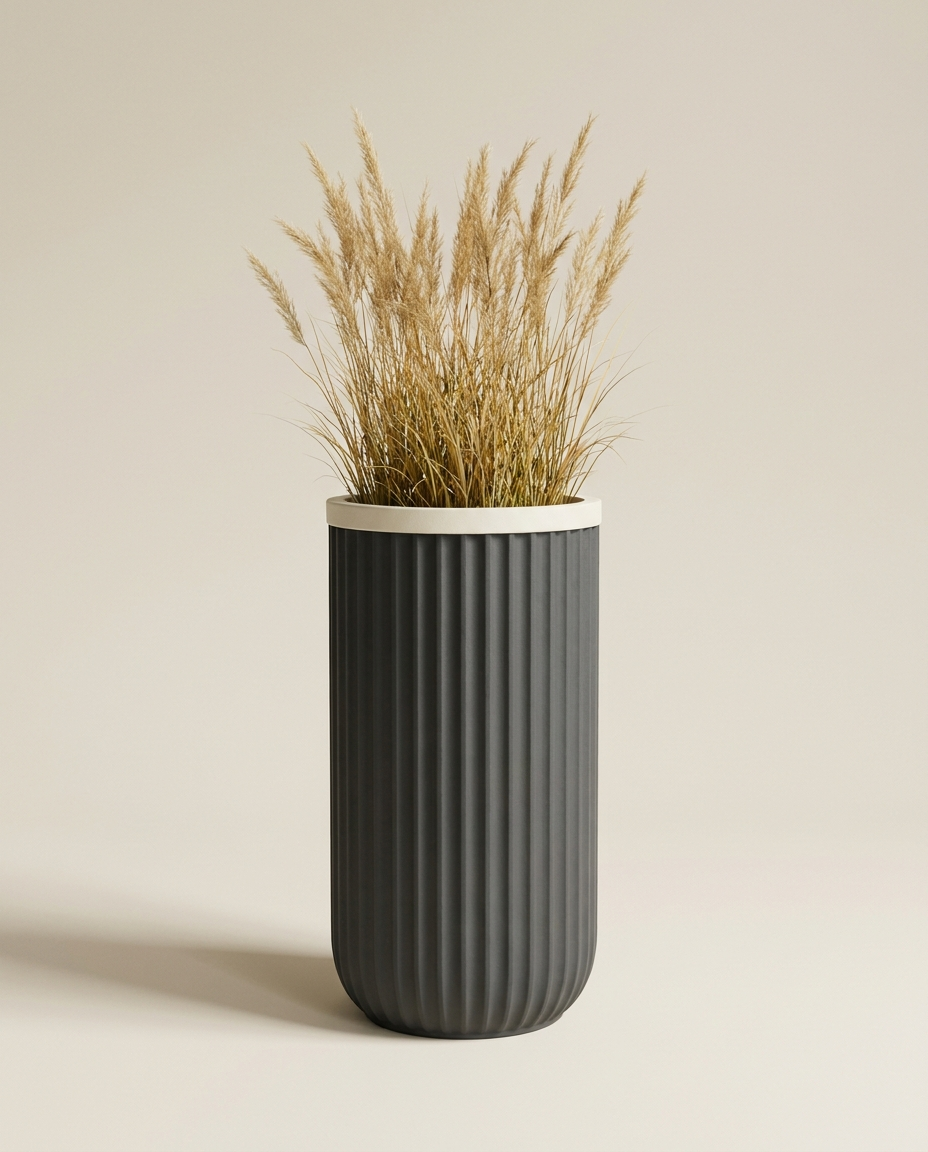
Fan palm · Ornamental grass · Black mondo grass

Concrete terraces, roof gardens, minimal courtyards

English cottage

Hydrangea · Geranium · Cosmos · Trailing lobelia

Country porches, kitchen gardens, informal patios

Japanese

Acer palmatum · Hakonechloa grass · Moss underplanting

Shaded corners, quiet courtyards, water features

Winter structure

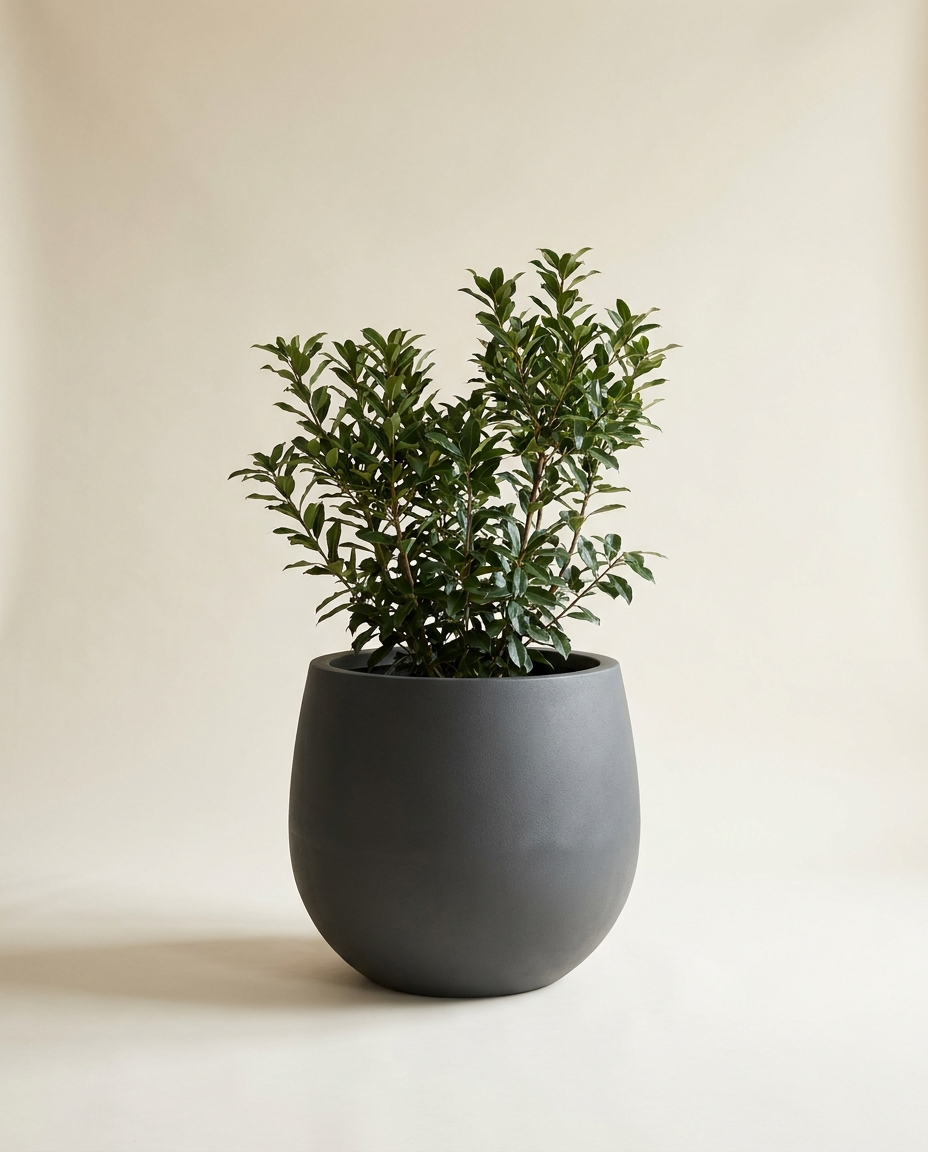
Conifer cone · Skimmia · Cyclamen · Ivy

Autumn to spring, evergreen anchor for cold months

Proportion cheat sheet

How big should the pot be?

Use these as starting points and go a size larger if in doubt — under-scaling is the mistake we see most often.

Beside a standard front door (2.0m)
60–75cm tall, 40–45cm wide
Flanking wide double doors (2.4m+)
80–95cm tall, 50–60cm wide
Corner of a 4×4m patio
50–65cm tall, planted to ~1.2m overall
End of a long path or lawn view
70–90cm tall, wider than intermediate pots
Small balcony back wall
60–70cm tall, narrow footprint (30–35cm)
Single statement piece on terrace
Bowl or trough 90cm+ across
Avoid these

Six mistakes we see every week.

  1. 01Buying pots first, deciding placement second. Walk the garden, mark the spots, then choose the planter.
  2. 02Lining up lots of small pots along a wall. One tall pot always wins over five short ones.
  3. 03Mixing too many pot colours and materials. Pick a family (colour or finish) and stick to it.
  4. 04Planting a delicate flower in a heavy pot, or a huge tree in a small one — the proportions have to earn each other.
  5. 05Forgetting drainage. Every planter needs a hole and, on hard surfaces, pot feet to lift it clear of the ground.
  6. 06Placing seasonal colour where it will be empty all winter. Anchor with evergreens, layer seasonal on top.
The gallery

The full range, as objects.

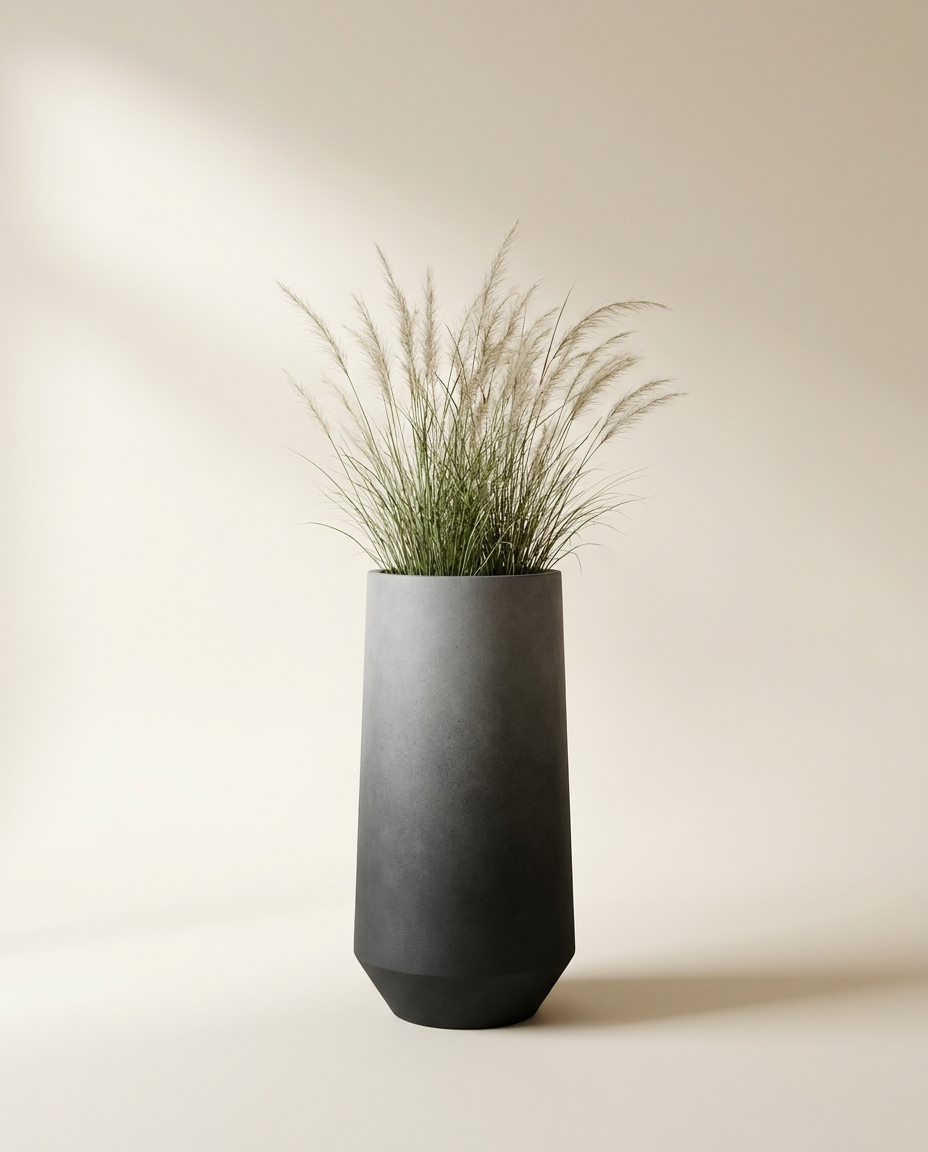
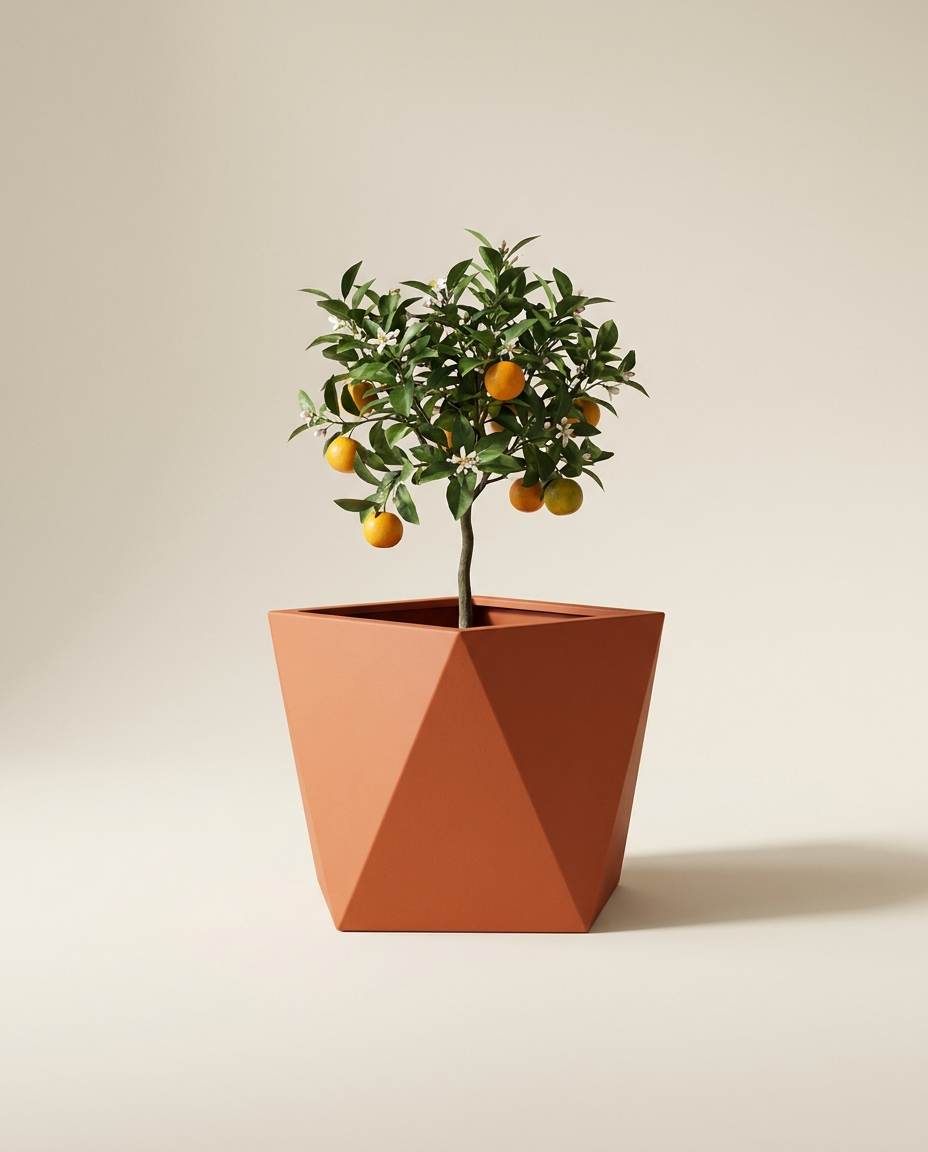
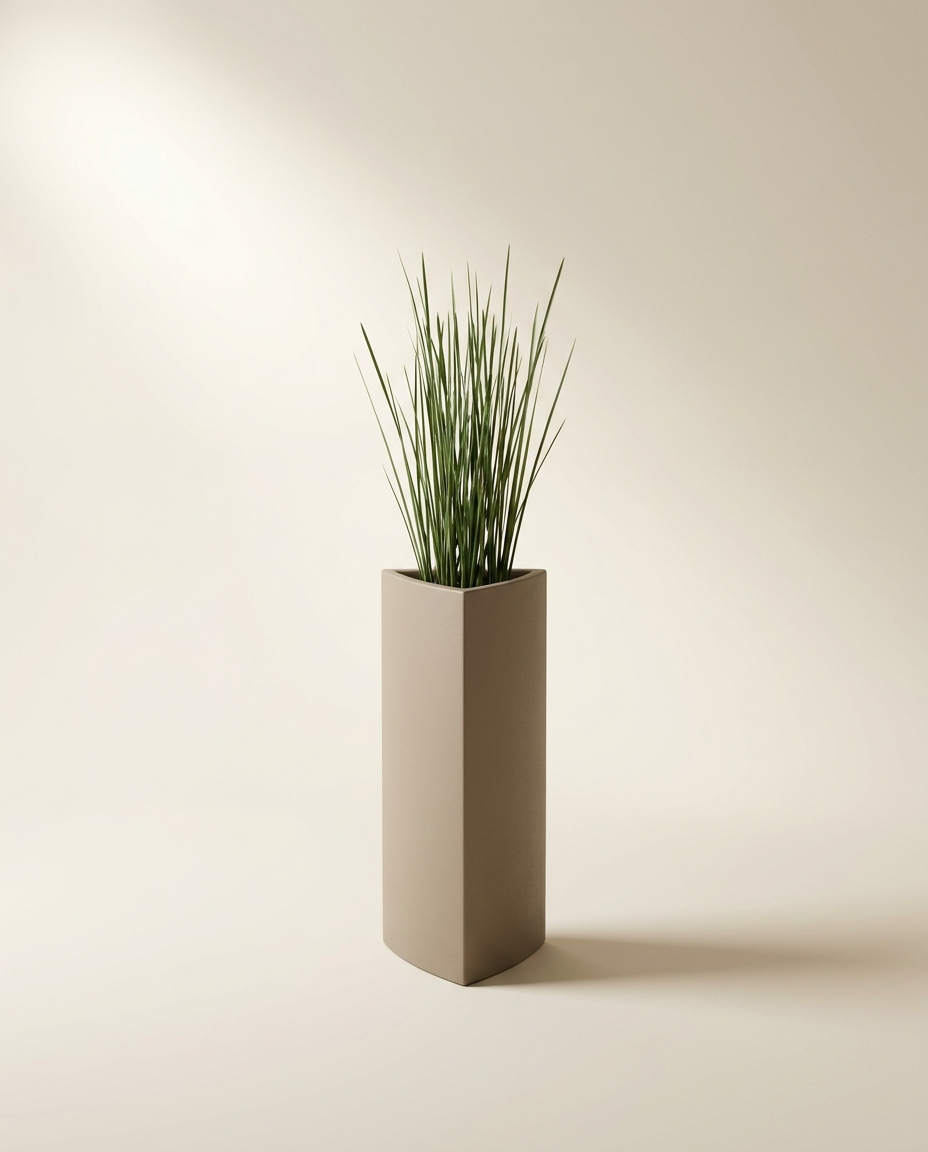
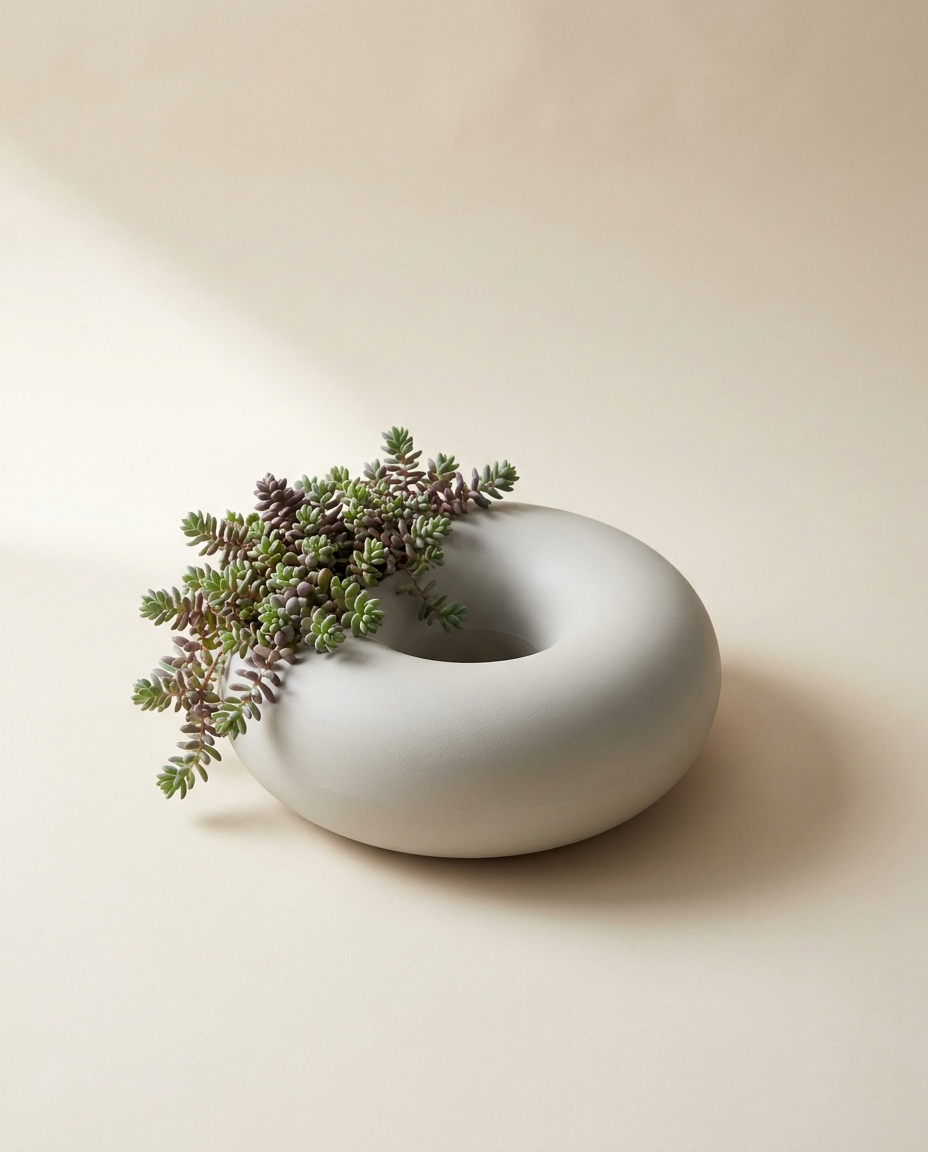
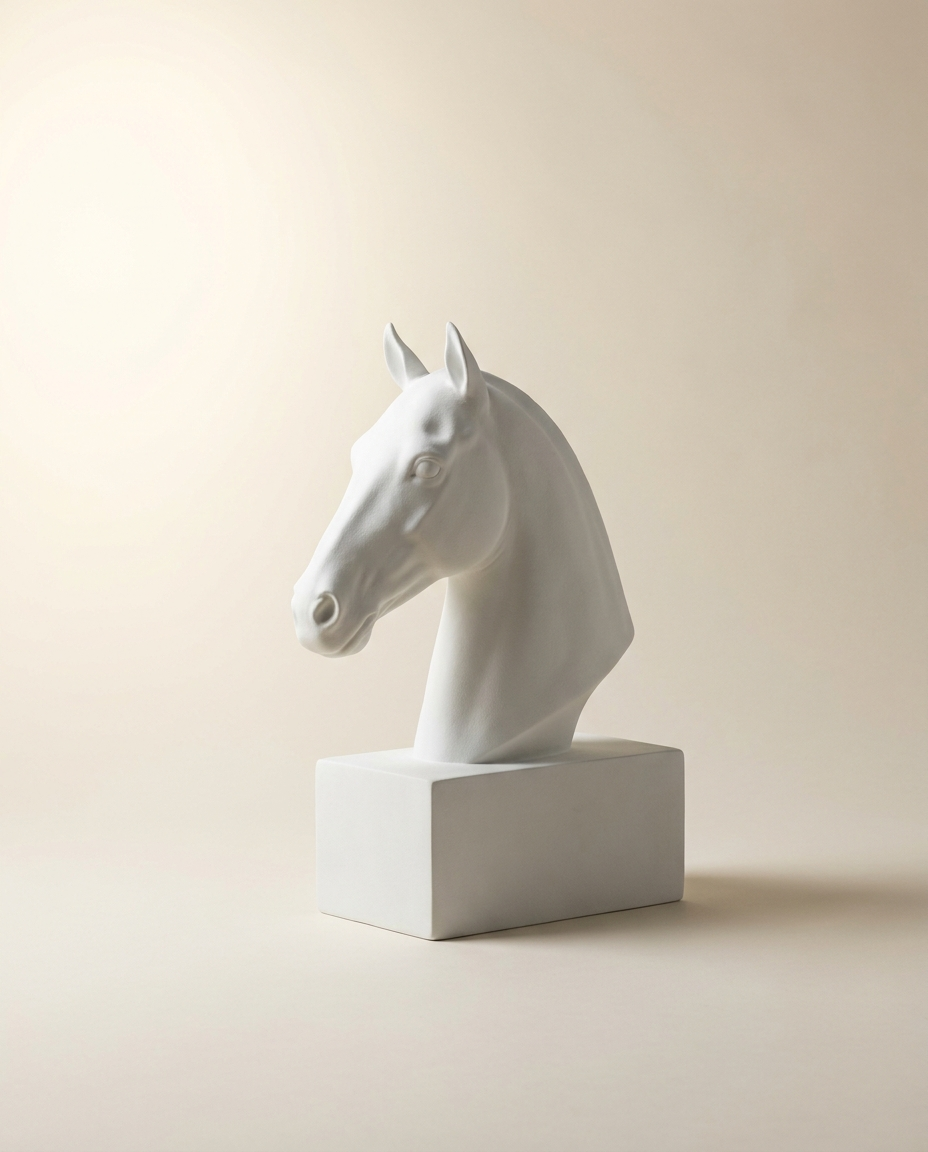
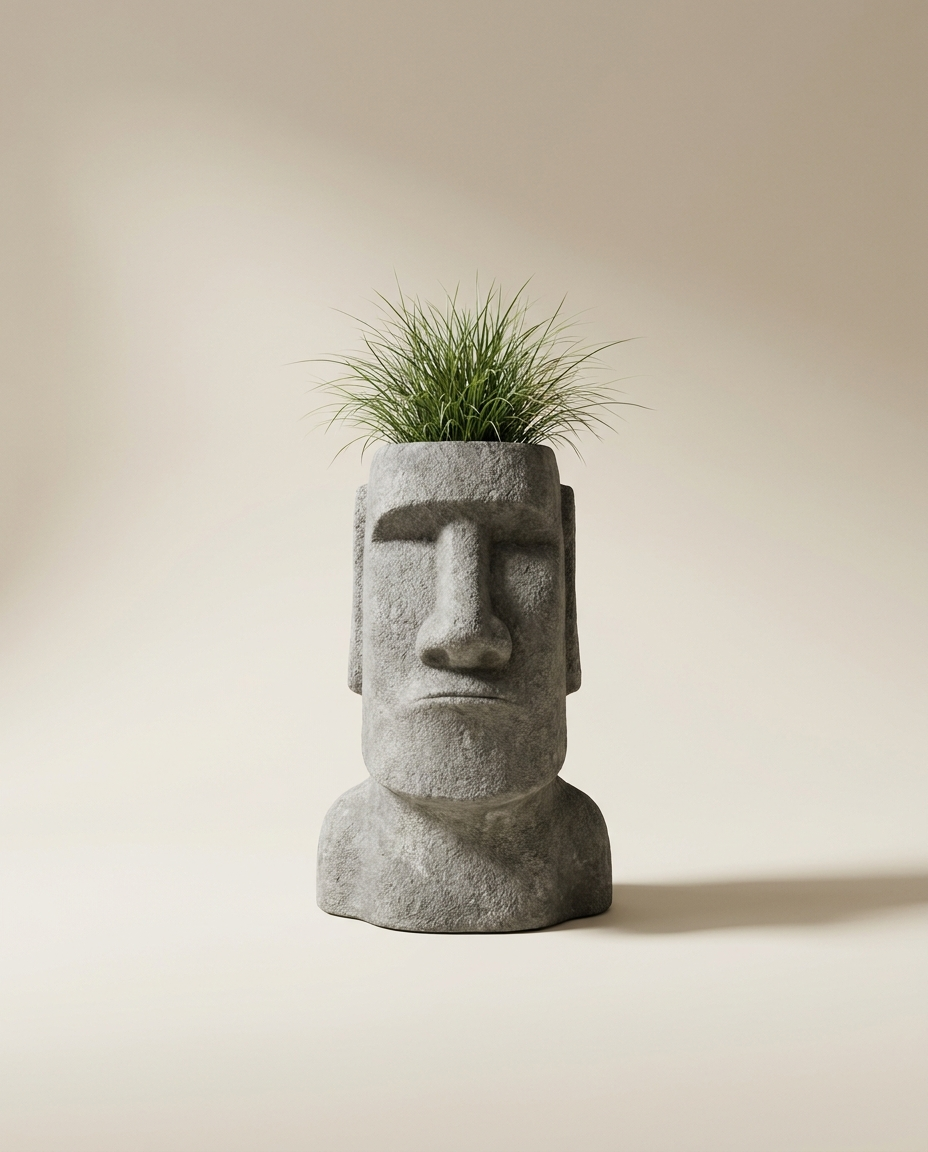
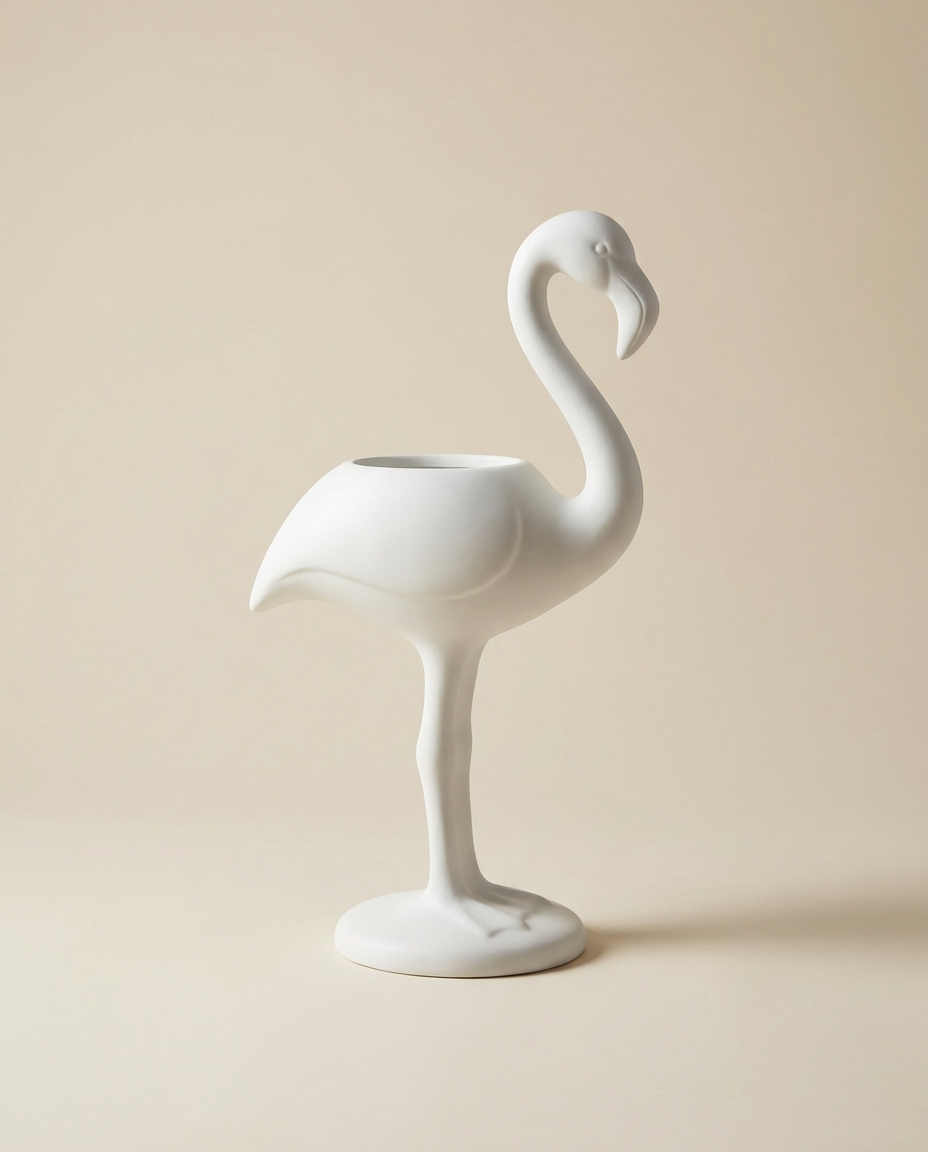
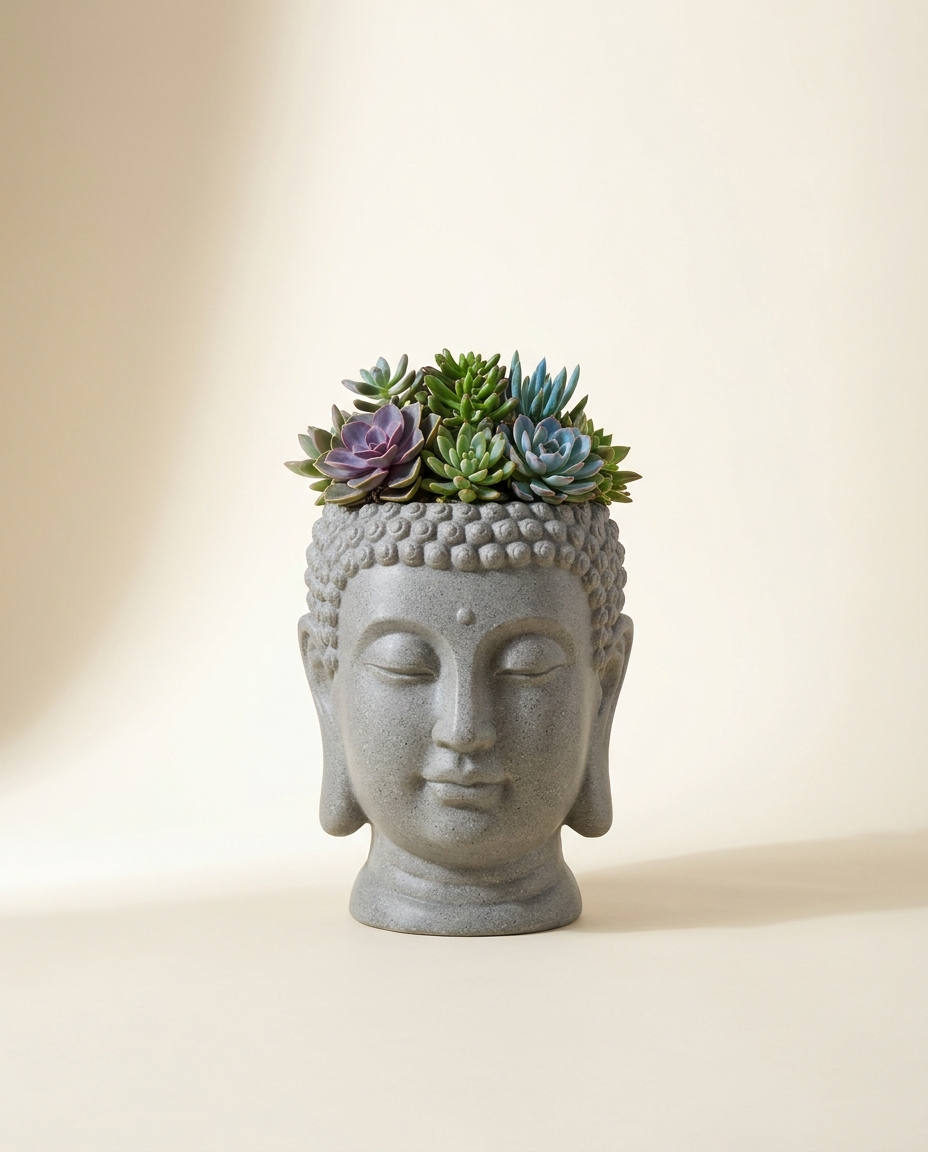
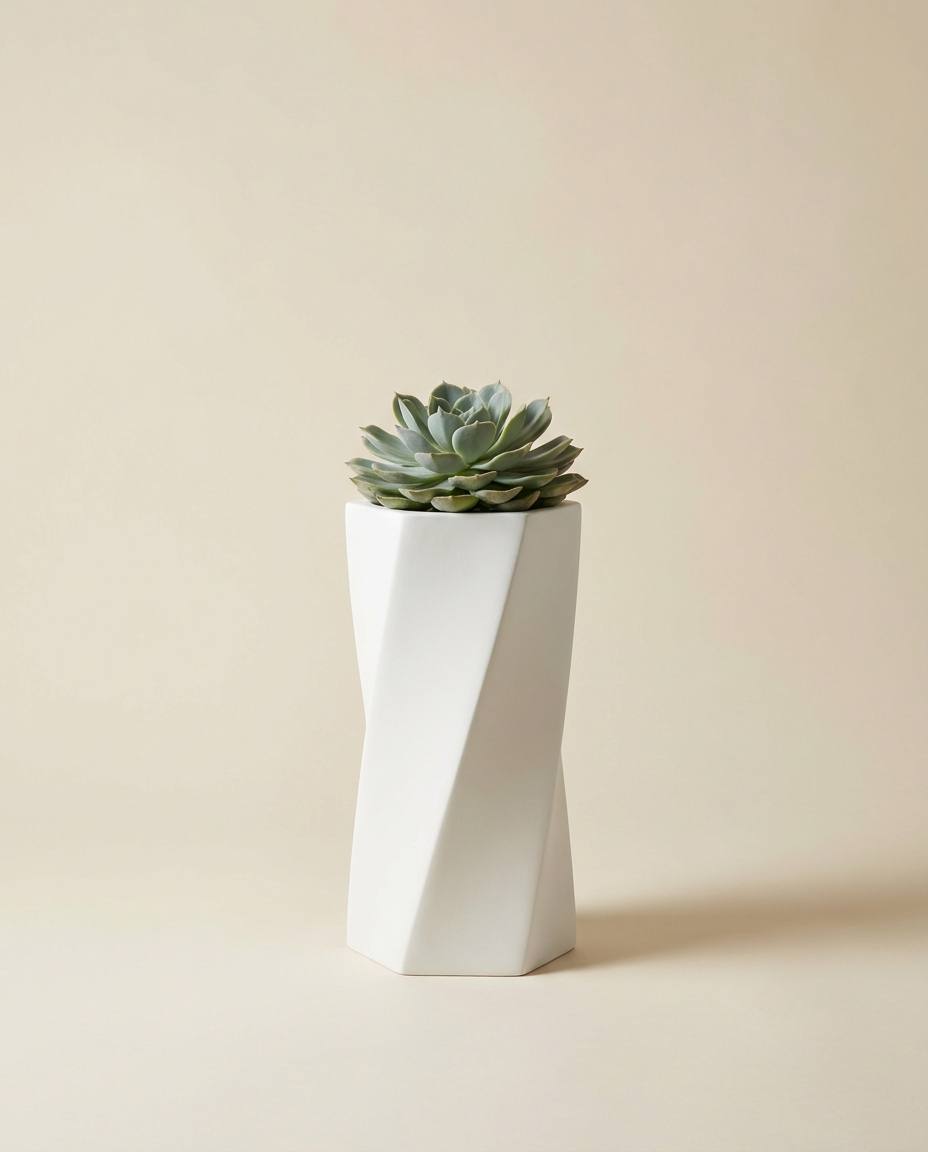
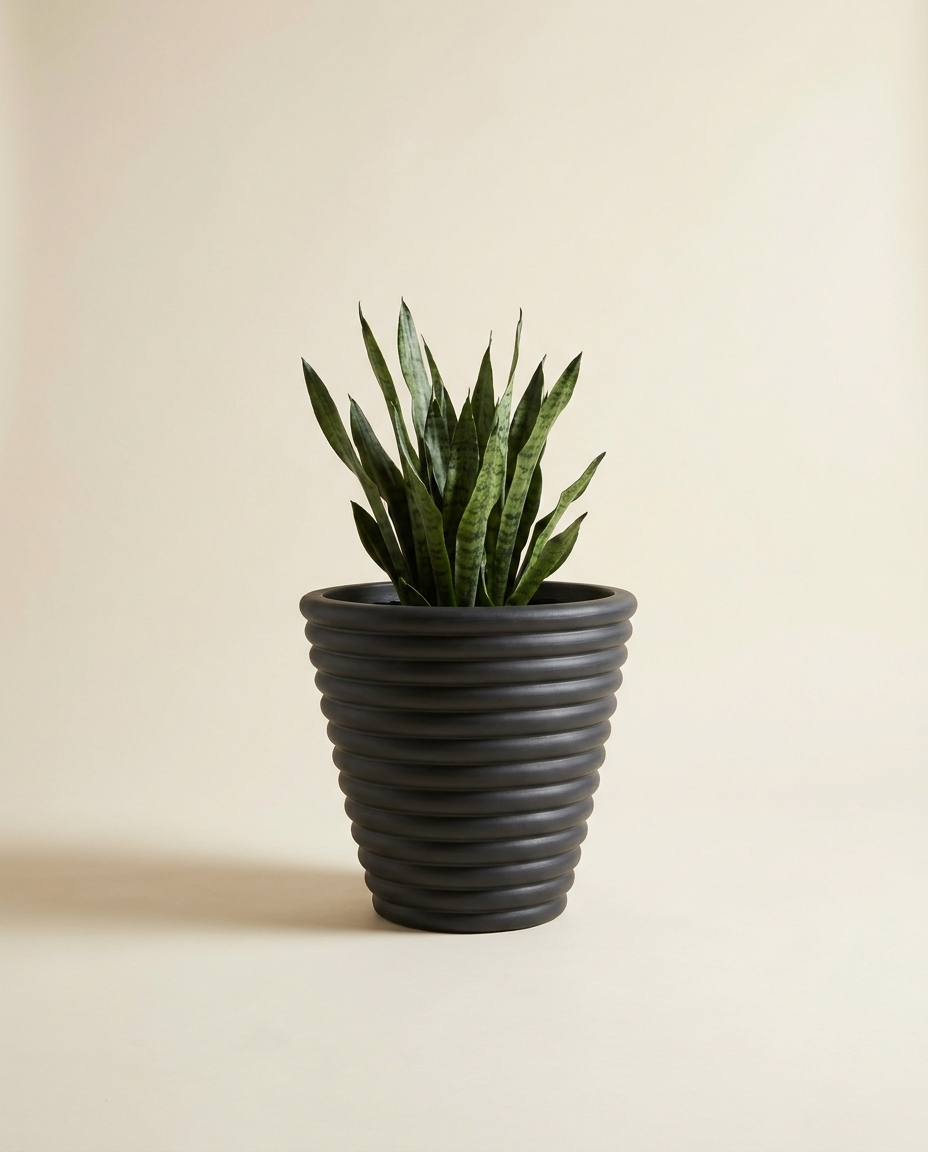
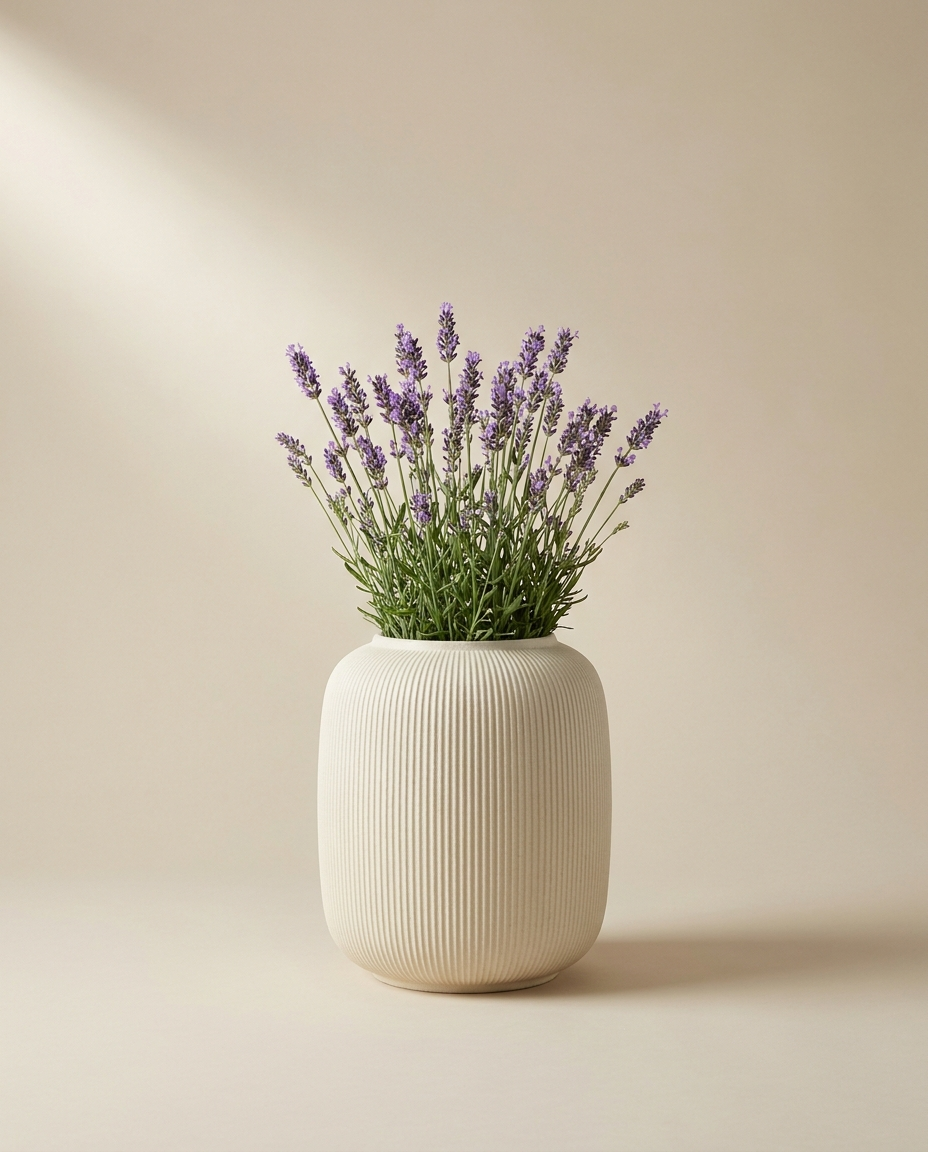
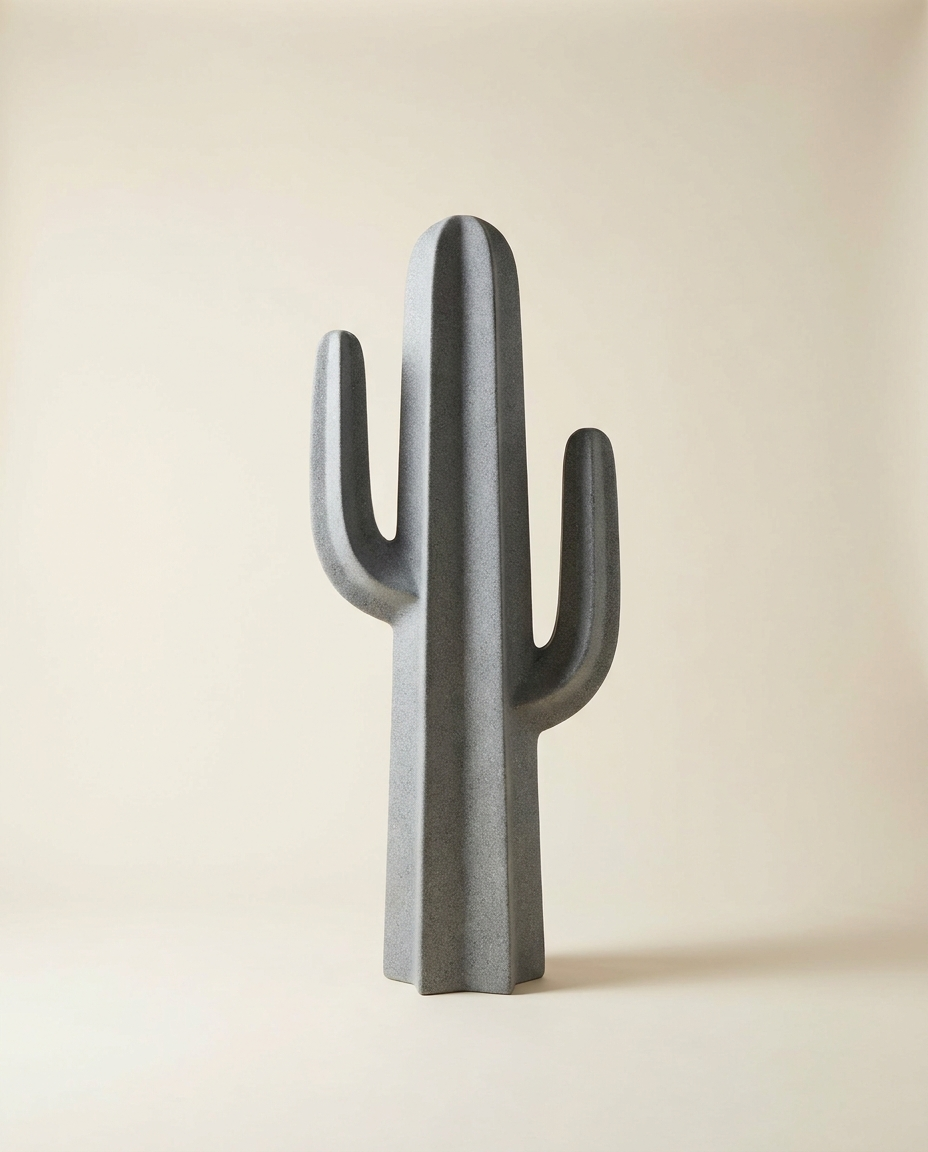
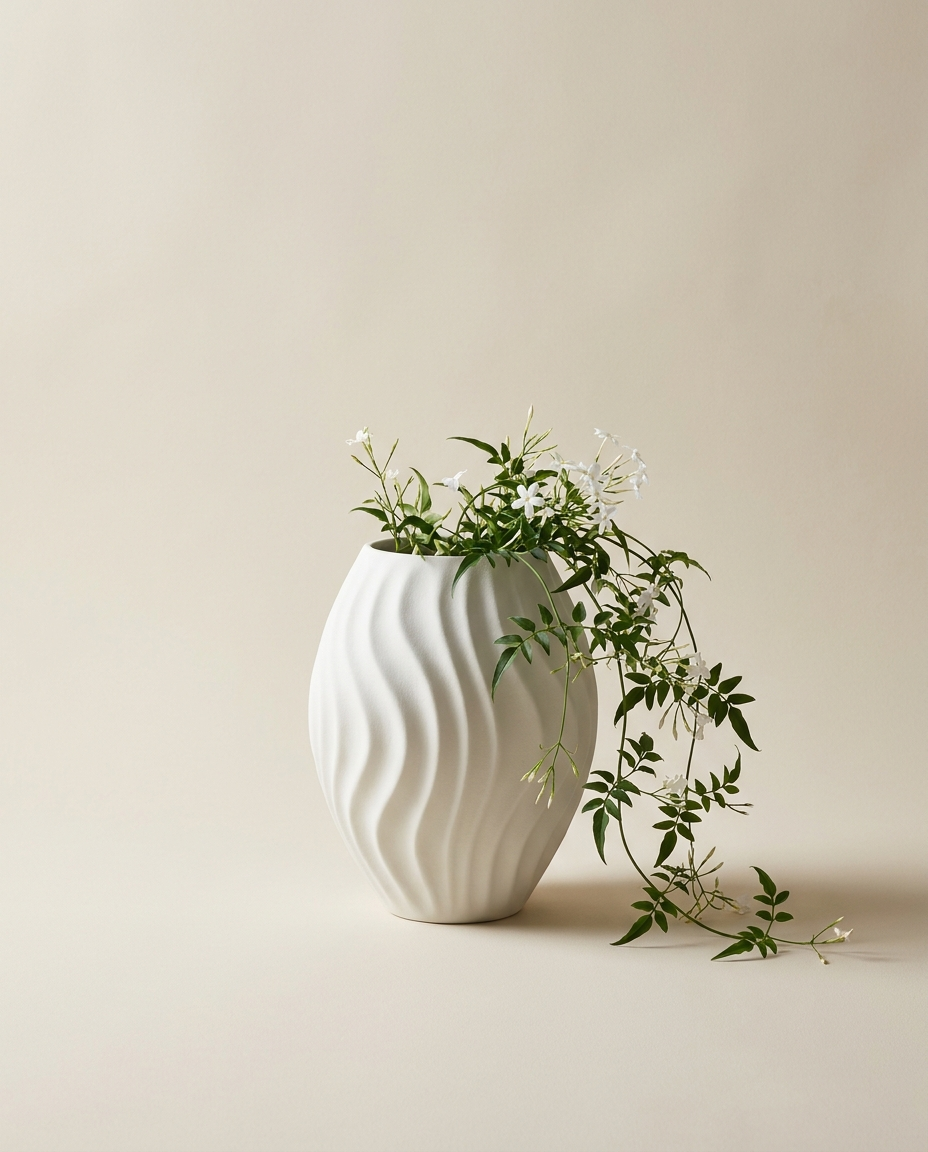
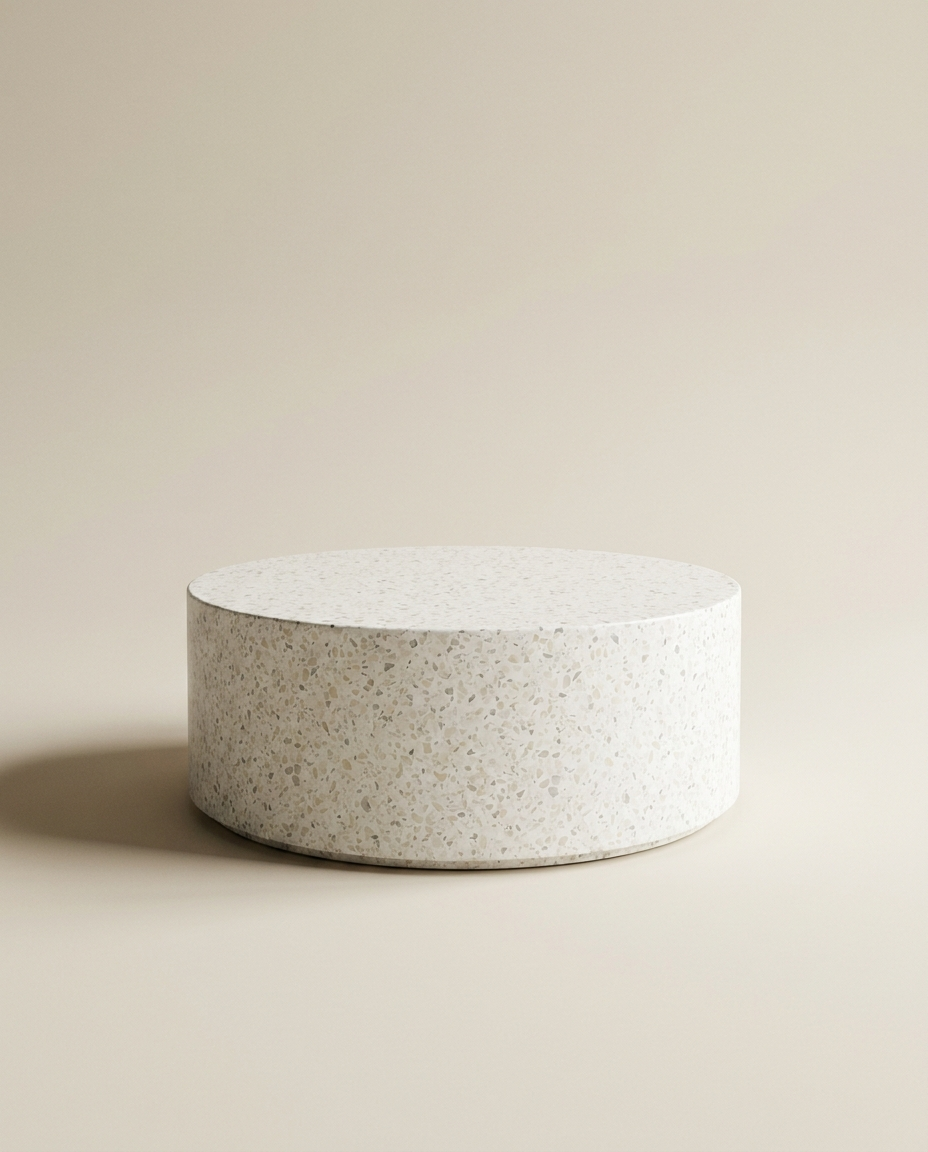
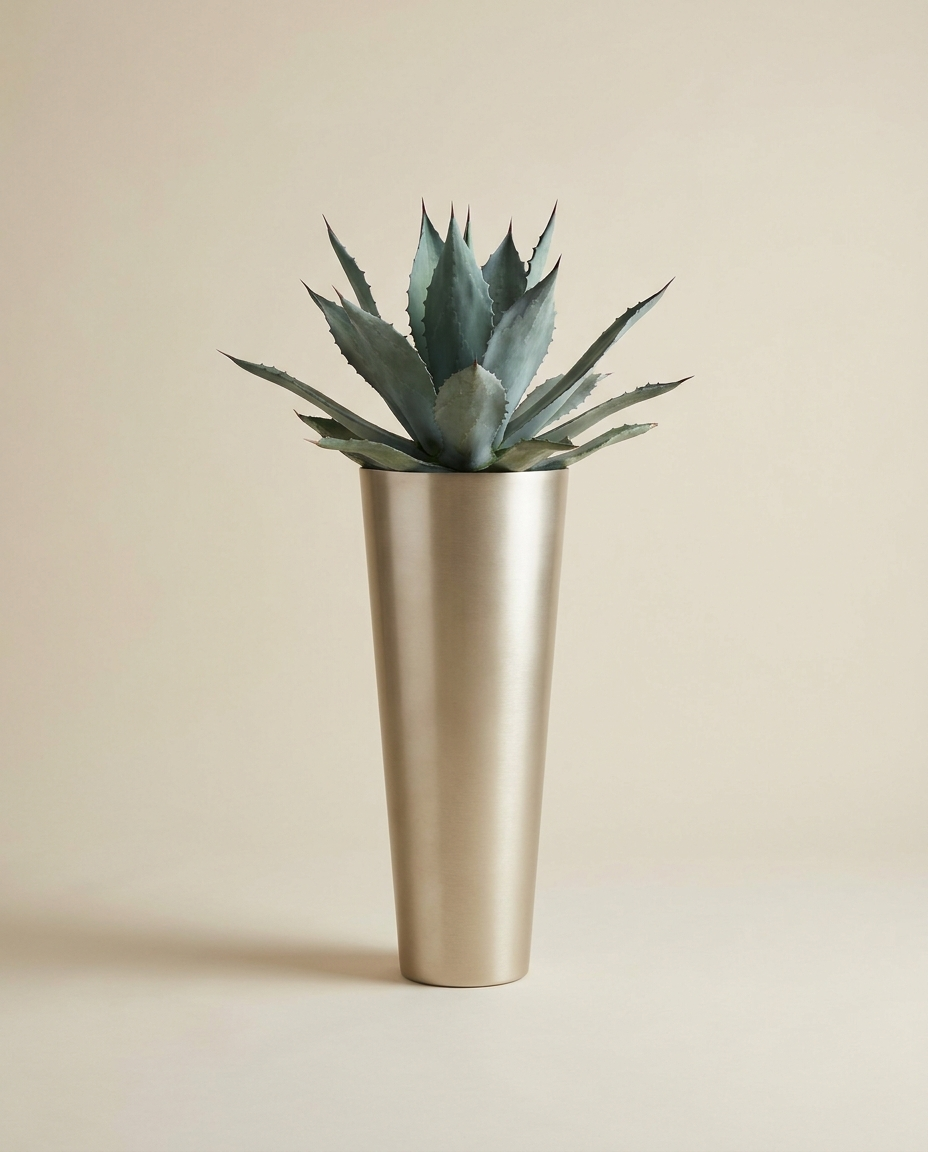
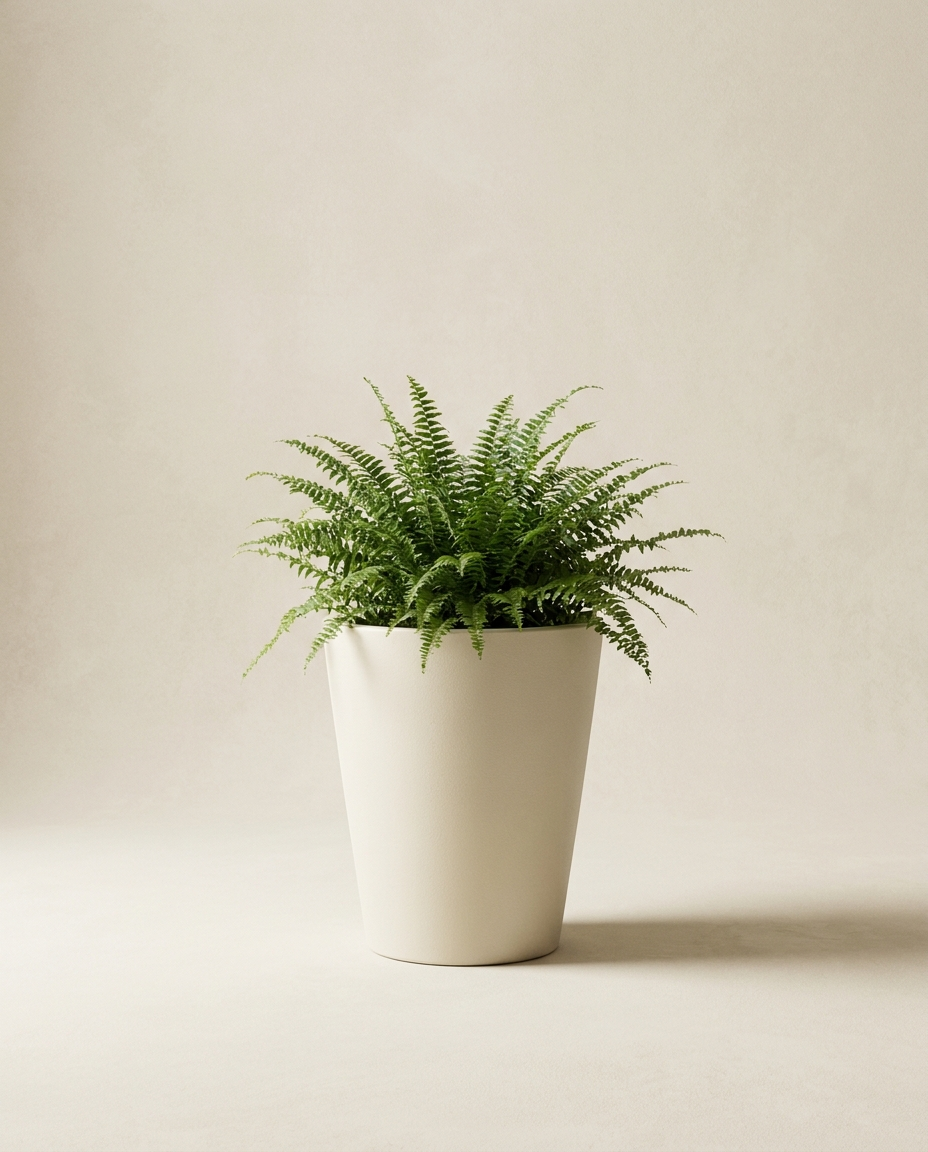
Every planter we make. Click any piece to open its product page, or drop it into the studio to try it in your own scene.

Next step

Try it in your own garden, before you buy.

The Planter Studio lets you place any pot, in any size, with any plant — against a photo of your own space. It is the fastest way to test the advice on this page.